The Real Cost of Screen Repair on the Suncoast, Explained
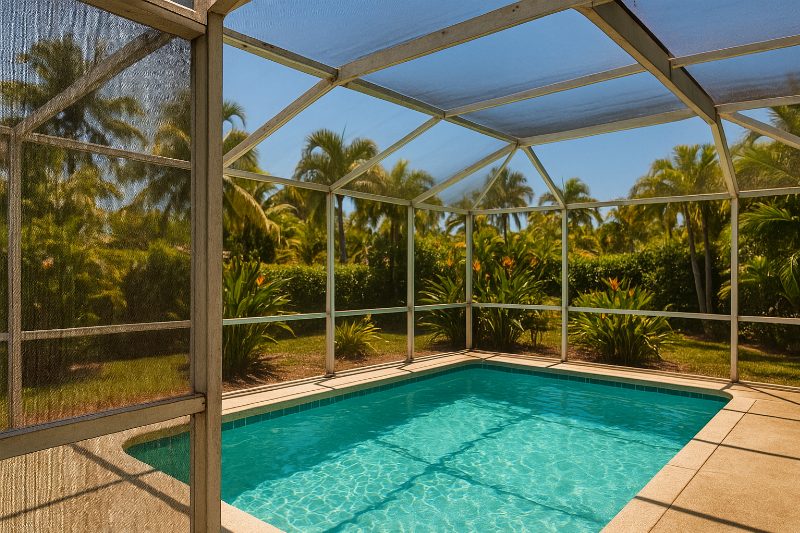
Sticker shock is almost always the result of not knowing what you're actually paying for. When it comes to screen repair on the Suncoast, the price range can feel bafflingly wide until you understand the handful of variables that drive every estimate. This post breaks all of them down, so you can walk into any conversation with a contractor knowing exactly what questions to ask and why the numbers look the way they do.
Why Screen Repair Prices Vary So Much
A single re-screen on a small window opening and a full pool-cage re-screen on a large Lakewood Ranch home are both called "screen repair," but they share almost nothing in common from a labor and materials standpoint. That's the first reason pricing feels inconsistent: the word "repair" covers everything from patching a small tear to replacing every panel on a two-story enclosure.
The second reason is Florida's environment. Salt air rolling in off the Gulf affects materials differently than the inland heat of Parrish or Ellenton. UV load, storm damage history, and the age of the existing frame all factor into how much work actually needs to happen before new screen can even go in. A contractor who quotes without looking at your enclosure in person is guessing, and you should treat that number accordingly.
The Main Factors That Move the Price
Understanding these drivers lets you anticipate your estimate before anyone sets foot on your property.
1. Screen Mesh Type and Grade
The mesh you choose is probably the single biggest material cost variable. Here's how the common options stack up:
- Standard fiberglass screen - The most affordable option, suitable for basic bug protection and good airflow. It's what most builders install originally.
- Pet-resistant or heavy-duty screen - Heavier weave, more resistant to punctures. Costs noticeably more per linear foot but saves money if you're constantly patching pet damage.
- No-see-um screen - Uses a much tighter weave to block the tiny biting midges that are a real nuisance in areas like Anna Maria Island and Siesta Key. It restricts airflow slightly more and costs more than standard mesh. (If no-see-ums are your main concern, our post on keeping no-see-ums out of your screened lanai for good goes into the tradeoff in detail.)
- Solar or privacy screen - Blocks a significant portion of sunlight and outward visibility. Popular on west-facing lanais in Sarasota and Longboat Key where afternoon sun is intense. Higher cost, but reduces cooling bills. We compare this option more thoroughly in our piece on Florida glass vs. privacy screen for your lanai.
- Pool-cage or Super Screen - A heavier-duty polyester mesh often used on pool enclosures. More durable than standard fiberglass but carries a higher price tag.
The same enclosure can cost meaningfully different amounts depending purely on which mesh you select. Ask your contractor to price out two or three options side by side.
2. Size of the Enclosure or Screen Area
This one is straightforward: more square footage of screen means more material and more labor hours. A small lanai screen door is a quick job. Re-screening an entire pool cage with multiple roof panels and side panels on a large Parrish or Lakewood Ranch home is a full day or multi-day project.
Roof panels on pool cages also require more care and safety setup than vertical side panels, which adds to labor time. Contractors typically price roof work at a higher per-panel rate than walls for this reason.
3. Frame Condition
If the aluminum frame is in good shape, you're mostly paying for new mesh and the labor to install it. If the frame has bent members, broken cross-braces, or corroded sections, those need attention before or alongside the re-screen work.
After a significant storm, frame damage is common. A pool cage that looks mostly intact from the yard may have subtle bends or loose connections that compromise the whole structure. Our guide on what to do after a hurricane damages your screen enclosure walks through how to assess this systematically so you don't miss anything.
Frame repairs and partial frame replacement add real cost. It's not padding - aluminum stock, fasteners, and the labor to properly fit and secure structural members takes time and skill.
4. Spline Condition and Replacement
Spline is the rubber or foam cord that locks the mesh into the frame channel. It degrades over time, especially under Florida's UV load. Old, cracked spline won't hold new screen reliably, so it almost always gets replaced during a re-screen. This adds a small material cost but is non-negotiable for a quality result.
If you want to understand how spline, mesh, and frame all work together, our anatomy of a pool cage breakdown is a good reference.
5. UV and Weather Degradation
Screen that has gone grey and brittle isn't just ugly - it's structurally compromised and can fail in ways that damage the frame channel during removal. Contractors sometimes have to work more carefully when removing severely degraded mesh to avoid collateral frame damage, and that takes longer.
If your screen is at this stage, you'll want to understand why it happened and what to expect from new materials. Our post on why screen looks grey and brittle explains the UV degradation process and what screen lifespan realistically looks like on the Suncoast.
6. Access and Job Complexity
Ground-level screen panels are the easiest and fastest to work on. Pool-cage roof panels require ladders or scaffolding. Multi-story enclosures add complexity. Tight spaces, landscaping that limits staging area, and screen enclosures attached to unusual home geometry all add time. These factors are reflected in labor cost, and they should be.
7. Number of Doors and Door Hardware
Screen doors take more time per unit than flat panels because of the frame assembly, hinges, latches, and closers involved. If your doors are worn out entirely, replacement is often the better call over repeated repairs. Door hardware - especially the heavy-duty type used on pool cage entry doors - carries its own material cost.
Geographic Factors Specific to the Suncoast
Where you live on the Suncoast genuinely affects both what your screen faces and sometimes what your repair costs.
Coastal locations like Anna Maria Island, Siesta Key, Longboat Key, and Lido Key deal with salt-laden air that accelerates corrosion on aluminum frames and shortens screen life. Homeowners in these areas often need more frequent service and may want to discuss corrosion-resistant frame treatments.
Inland areas like Parrish, Ellenton, and Lakewood Ranch face intense heat cycles and sometimes more storm exposure, but without the salt component. Screen lifespan can actually be longer here if the enclosure is maintained.
Sarasota and Bradenton sit in the middle, with mixed exposure depending on proximity to the bay. Our team serves all of these areas - you can find location-specific information on our screen and pool-cage repair in Sarasota and Bradenton pages.
Travel time and fuel are also a real cost for any service business. Contractors serving a tight local area often have lower overhead per job than those driving long distances, which can be reflected in pricing. We keep our full list of service areas updated so you know exactly where we operate.
Insurance: When Someone Else Pays
If a named storm, hail, or a falling tree caused your screen damage, your homeowner's insurance may cover some or all of the repair cost. This changes the financial picture significantly, but the claims process has its own complexity.
The short version: document everything before any work begins, understand your deductible, and don't assume the adjuster's initial assessment is final. Our detailed post on filing a screen-damage insurance claim in Florida covers the process step by step and is worth reading before you call your insurer.
What a Fair Estimate Looks Like
A legitimate estimate should be itemized enough that you can see what you're paying for. At minimum, it should separate labor from materials, specify the mesh type being quoted, and note whether frame repairs are included or excluded.
Be cautious of quotes that arrive without an in-person inspection, especially for pool cages. It's genuinely impossible to accurately price a re-screen job without seeing the frame condition, confirming measurements, and assessing access. A low number from a phone call is an opening bid, not a real quote.
Ask questions like:
- Is spline replacement included?
- What happens if we find hidden frame damage once work starts?
- What mesh type are you quoting, and what alternatives are available?
- Is door hardware included or separate?
- What's the warranty on labor and materials?
A contractor who answers these questions clearly and without irritation is a contractor worth working with.
Getting a Quote That Actually Reflects Your Job
Every pool cage and lanai is different. The numbers that matter are the ones based on your specific enclosure, your chosen mesh, and your frame's actual condition, not a ballpark from a website or a neighbor's anecdote.
The best way to get an accurate picture of your costs is to have someone come out and look. We offer free on-site estimates across the Suncoast, from Palmetto and Ellenton down through Sarasota, Osprey, and Nokomis.
If you have questions before you're ready to schedule, our frequently asked questions page covers a lot of the common ones, and you're always welcome to reach out to us directly to talk through your situation. We're happy to explain what we're seeing and why, without pressure.
Screen repair shouldn't be a mystery. Once you know what you're paying for, the numbers make sense.