The Anatomy of a Pool Cage: Frame, Screen, Spline & Hardware
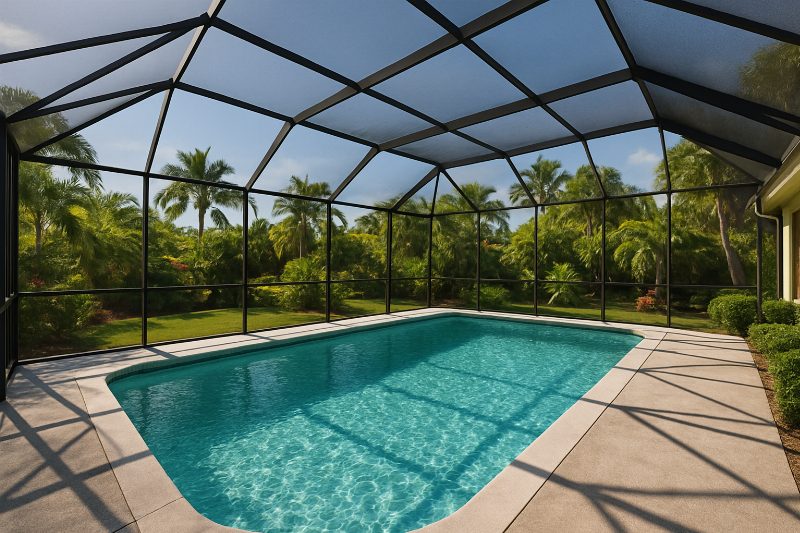
Your pool cage is doing more work than you probably realize. Every afternoon it blocks blistering UV rays, deflects wind-driven debris, and keeps no-see-ums from turning a relaxing swim into an itchy ordeal. But the only time most homeowners think about that structure is when something goes wrong: a screen turns grey and saggy, a spline pops out, or a frame rail shows an ominous bow after a summer storm. Understanding what every component actually does, and why it eventually fails, puts you in a far stronger position, whether you are planning routine maintenance, budgeting for a repair, or trying to explain the damage to an insurance adjuster.
This guide walks through the entire anatomy of a pool cage, piece by piece. Nothing is skipped. By the end, you will know what to look at, what to look for, and what questions to ask a screen professional before any work begins.
The Aluminum Frame: Your Cage's Skeleton
The frame is the load-bearing backbone of the whole enclosure. Almost every pool cage built in Florida over the past four decades uses extruded aluminum, and for good reason. Aluminum does not rust, it is light enough to handle the geometry of large vaulted enclosures, and it can be anodized or painted to resist the coastal air that corrodes so many other metals.
Main columns and corner posts. These are the heaviest-gauge pieces in the frame, typically ranging from 0.050 inches to 0.080 inches of wall thickness. They transfer the roof load and wind load directly into the concrete deck footing. When you see a column that is visibly bent or cracked at the base, that is a structural problem, not a cosmetic one.
Horizontal rails and mid-span supports. These horizontal members tie the columns together and give each screen panel a rigid border to stretch against. They also help distribute lateral wind pressure across the whole structure instead of concentrating it at one point.
Roof framing. Vaulted and hip-roof cages use a network of angled purlins and ridge beams. This geometry is what lets a properly engineered cage shed wind load and resist uplift. Florida building codes in counties like Manatee and Sarasota require pool cages to be engineered to specific wind-speed ratings, so if your enclosure was permitted and built correctly, that frame was designed to take a beating.
What goes wrong with aluminum frames. Age, impact, and oxidation are the three main enemies. Oxidation leaves a chalky white surface residue that looks like paint failure. That is actually the aluminum's natural oxide layer building up unevenly. It does not compromise structural integrity on its own, but it is a sign that the protective coating has worn away and the metal is working harder than it should. Impact from hurricanes, falling branches, or even a heavy pool toy can dent or crack a rail. Hairline cracks in corners and welds are worth taking seriously because water migrates into those joints and, over many freeze-thaw or expansion-contraction cycles, opens them further.
If you are unsure whether damage to your frame is cosmetic or structural, the screen and pool-cage repair services page explains what a professional inspection covers.
The Screen Mesh: The Surface That Does the Real Work
Screen is the most visible part of a pool cage and also the most misunderstood. Not all screen is the same, and choosing the wrong type for your situation leads to premature failure, pest problems, or both.
Fiberglass screen. The most common and affordable option. Fiberglass yarns are coated with PVC and woven into a mesh. It installs easily, costs less to replace, and works well in most residential applications. Its weakness is UV degradation over time, which is an especially significant issue here in Southwest Florida where the sun angle is high and the UV index stays elevated almost year-round. UV damage turns screen grey and brittle well before the mesh actually tears, and many homeowners do not realize the screen has lost most of its functional life until it is already failing.
Aluminum screen. More durable than fiberglass and more resistant to pet damage, but it oxidizes over time and is harder to install without visible kinks and creases. You see it less often in new installations these days, but it remains a solid choice where pets or kids will be pushing against the mesh frequently.
Super-screen and no-see-um screen. These are finer-weave meshes designed to block smaller insects. Standard fiberglass screen has an opening of roughly 18 by 16 threads per inch. No-see-um screen steps that up to about 20 by 20 or tighter. If you are dealing with tiny biting insects on your lanai, this is the upgrade worth considering. We cover the full strategy in our post on keeping no-see-ums out of your screened lanai.
Solar and privacy screen. High-density weave screens can block 80 to 90 percent of sunlight, dramatically reducing heat and glare on your lanai. The trade-off is reduced airflow and a noticeably different look from the outside. If you are weighing that decision, the comparison between privacy screen and Florida glass is a good place to start.
Screen sizing and spans. Professional screen installers pay close attention to panel size. A screen panel that spans too great a distance without a mid-rail to support it will bow and sag over time, even if it was installed with perfect tension. This is why the frame geometry and the screen choice are closely connected decisions, not independent ones.
The Spline: The Unsung Hero of Every Panel
The spline is a round or oval vinyl cord pressed into a channel around the edge of each screen panel, locking the mesh against the aluminum frame. It is a simple mechanical concept, but the details matter enormously.
Spline size. Spline comes in multiple diameters, typically ranging from 0.140 inches to 0.200 inches. The right size depends on the depth of the channel routed into your frame extrusions. Use spline that is too thin and the screen will pull free under any meaningful load. Use spline that is too thick and you cannot get it seated without tearing the mesh. Experienced installers measure the channel before ordering, which sounds obvious but is a step that shortcuts often skip.
Spline material. Standard gray vinyl spline is fine for most applications. In direct sun, darker-colored or UV-stabilized spline holds up better over time. Some older cages used foam spline or rubber spline, which tends to dry out and crumble well before the screen itself fails, leaving panels loose and floppy along their edges.
Why spline pops out. The two most common causes are UV degradation of the vinyl and screen tension that was never set correctly during installation. When screen is pulled too tight, the spline is under constant outward pressure and will eventually work free, starting at corners where stress concentrates. Conversely, screen installed too loosely will billow in the wind and eventually vibrate the spline out of its channel. Good installation is a calibrated process, not just pressing things into place.
A popped spline does not always mean you need a whole new screen panel. If the mesh itself is undamaged, a screen professional can often re-seat the original mesh with fresh spline. If the screen is also degraded, doing both at the same time is the smart call.
Hardware: Hinges, Latches, Fasteners, and Anchors
Hardware is the category most homeowners overlook entirely until something breaks. It is also the category most vulnerable to the salt air environment that affects properties closest to the Gulf, from Anna Maria Island and Longboat Key down through Siesta Key and Lido Key.
Screen door hinges and closers. Pool cage doors typically use continuous (piano) hinges or heavy-duty butt hinges. The spring-loaded closer mechanism keeps the door shut so insects cannot wander in while your hands are full of pool toys or towels. When a closer loses tension or a hinge pin corrodes, the door swings free and gaps appear. Replacing a single hinge or closer is an inexpensive repair that homeowners often delay far too long.
Latches. Most pool cage latches are simple spring-loaded cam latches. They fail in two ways: the spring weakens and the latch no longer catches, or the strike plate corrosion causes misalignment. Both are quick fixes. Some pool safety codes, particularly those addressing barrier requirements for households with young children, specify latches that meet particular height and self-latching standards. If you have children or are selling a home, it is worth confirming your hardware is compliant.
Fasteners. The screws, bolts, and rivets holding your frame together and anchoring it to the deck need to be stainless steel or aluminum to survive the Florida environment. Galvanized fasteners will rust, staining the surrounding aluminum and, more importantly, losing clamping strength. When you see brown streaks running down from screw heads, that is your cue to replace those fasteners before they back out entirely.
Anchor bolts and base plates. At the bottom of every column is a base plate fastened to the concrete deck with anchor bolts. This is where wind uplift is resisted. Corroded or loose anchor bolts are one of the most common structural problems found during post-hurricane inspections. They are also one of the easiest to miss because they sit low to the ground, often partially hidden by plants or patio furniture.
For a detailed look at what happens when this hardware fails in a storm, our post on what to do after hurricane damage walks through the inspection and recovery process step by step.
How the Parts Work Together Under Wind Load
It is worth stepping back to understand the system as a whole. In a wind event, the screen mesh is the first surface the wind pushes against. The screen transfers that load to the spline, which transfers it to the frame rails, which transfer it to the columns, which transfer it to the anchor bolts and into the deck and footing below. If any one link in that chain is compromised, the failure can cascade.
This is why a cage that has a few torn screens, several splines that have popped free, and corroded anchor bolts is more vulnerable in its next storm than the damage tally alone might suggest. The mesh panels that are intact are now carrying load that should have been shared across the whole enclosure.
Understanding this helps explain why a comprehensive repair approach, addressing frame, screen, spline, and hardware together, almost always delivers better long-term value than patching individual components in isolation.
How Long Should Each Component Last in Southwest Florida?
These are rough but honest expectations for a cage in our climate, maintained reasonably well and not subjected to a direct hurricane hit.
- Aluminum frame: 20 to 40 years before structural concerns arise, depending on the gauge of extrusions used and proximity to salt air
- Standard fiberglass screen: 7 to 12 years in full sun; longer in shaded or north-facing panels
- No-see-um or solar screen: similar lifespan, sometimes slightly less because finer weaves trap more debris and moisture
- Vinyl spline: 5 to 10 years; often the first component to need replacement
- Hinges and closers: 5 to 15 years, heavily influenced by salt exposure and frequency of use
- Fasteners: 10 to 25 years, stainless steel lasting far longer than galvanized
Why Professional Inspection Matters Before You Repair
Many homeowners in Bradenton, Lakewood Ranch, Parrish, and Palmetto call about a screen replacement and, during the visit, the technician finds something else that needed attention. Loose anchor bolts. A frame rail that was cracked in a previous storm and patched cosmetically. Spline that is holding on by a thread in three panels. None of that is visible from across the pool deck.
A professional inspection is not just about diagnosing what you can already see. It is about finding what is quietly undermining the structure before it becomes a larger and more expensive problem. If you are curious what the process looks like for homeowners in your area, the locations page has specific information for each community we serve.
For Sarasota homeowners who have navigated an insurance claim after screen damage, the guide to filing a screen-damage insurance claim in Florida is a practical resource worth bookmarking before you need it.
The Bottom Line
A pool cage looks simple from the outside: some aluminum tubing and a whole lot of screen. But every component, frame, mesh, spline, and hardware, is doing a specific job, and each one has a predictable lifespan in the Southwest Florida environment. Knowing the anatomy of your enclosure helps you spot early warning signs, have more productive conversations with repair professionals, and make smarter decisions about when to patch and when to replace.
If something on your cage has caught your eye and you want an honest assessment, reach out to our team to schedule an inspection. We cover Bradenton, Lakewood Ranch, Sarasota, Siesta Key, Ellenton, Anna Maria Island, and all surrounding communities, and we are happy to explain what we find in plain language before any work begins.