Storm-Season Prep for Your Florida Screen Enclosure
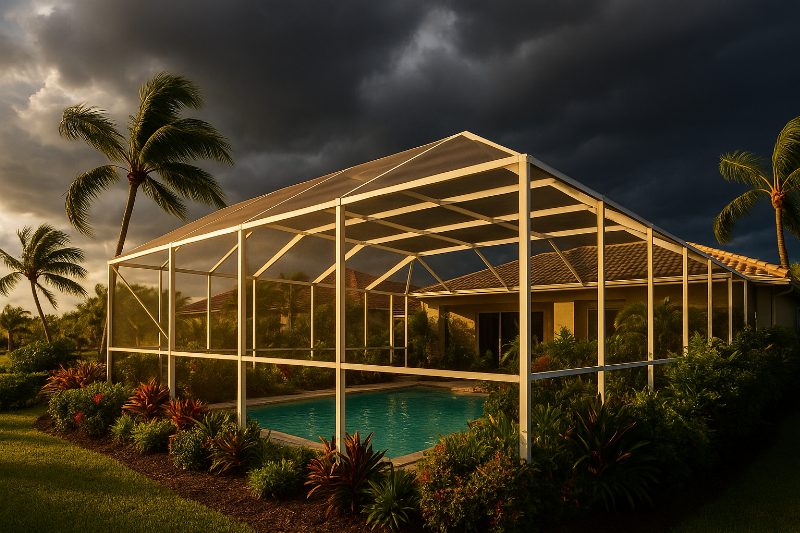
Florida gives you a lot: year-round sunshine, a backyard pool, evenings spent bug-free under a screened lanai. What it also gives you, without fail, is hurricane season - six months that run from June 1 through November 30 and demand that every homeowner take their property seriously. Your screen enclosure is one of the most vulnerable structures on your lot, and the time to deal with it is before a storm is named, not after.
This guide walks you through exactly what to inspect, what to fix, what to do when a storm is close, and what to expect in the aftermath. Whether you live on Anna Maria Island, in a Lakewood Ranch neighborhood, or on a barrier island like Siesta Key or Longboat Key, the fundamentals are the same.
Why screen enclosures are so vulnerable in storms
A screen enclosure is, by design, mostly open space. The aluminum frame is engineered to hold screens taut and keep bugs out - not to act as a wind barrier. That's actually intentional: modern Florida pool cages are built to allow wind to pass through the screen mesh rather than catch it like a sail. When the screen mesh is intact and in good condition, wind loads transfer through the mesh and dissipate. When the mesh is torn, missing, or badly degraded, the aerodynamics change and the frame starts taking forces it was never meant to handle.
That's one reason a single torn panel matters far more than it looks. It isn't just a cosmetic issue or a bug problem - it's a structural weak point that can allow wind pressure to build unevenly across the frame and cause catastrophic failure. If you want to understand exactly how the frame, screen, and spline system work together, our post on the anatomy of a pool cage frame, screen, spline, and hardware is a solid starting point.
Salt air, intense UV exposure, and the freeze-thaw cycles that don't really exist here (but the relentless heat does) all degrade aluminum framing and screen mesh faster than many homeowners expect. By the time storm season arrives, a screen that looked "fine" in January may already be brittle and ready to fail.
Start your inspection in early spring - not June
The biggest mistake Gulf Coast homeowners make is waiting until a storm is in the forecast to think about their enclosure. By then, screen companies are booked out, hardware stores are picked clean, and you're left hoping for the best. A solid pre-season inspection should happen in March or April at the latest.
Here's what to look at:
The screen mesh itself
- Hold a flashlight up to each panel at an angle and look for holes, tears, or thin spots.
- Run a flat hand lightly over the surface - brittle screen will feel crinkly or stiff rather than slightly flexible.
- Look for discoloration: grey, chalky, or faded screen is UV-damaged and has likely lost much of its tensile strength. Our post on why screen looks grey and brittle from UV damage goes into detail on what's actually happening at the fiber level.
- Check the bottom panels especially - these get the most abrasion from lawn equipment, foot traffic, and debris.
The spline
The spline is the rubbery cord that locks the screen into the frame channel. Over years of sun and heat, it hardens, shrinks, and cracks. A degraded spline means the screen isn't properly anchored and will pop out at much lower wind speeds than it should. Press on the spline in a few places around each panel; it should have a little give. If it's rock-hard or visibly cracked, it needs replacing.
The aluminum frame
- Look for bent or bowed frame members, especially along the roof and any sections that run horizontally.
- Check every corner bracket, hip brace, and base plate for corrosion or loose fasteners. Near the coast - on Longboat Key, Lido Key, or Nokomis - salt air accelerates oxidation significantly.
- Make sure base plates are still solidly anchored to the concrete deck. Wiggle the bottom of the frame; there should be no movement.
- Look for any frame members that have pulled away from the screen room wall or home fascia.
The door
Pool cage doors take more wear than any other component. Check that the door closes squarely, that the latch engages positively, and that the hinges are tight. A door that hangs crooked is a door that will blow open in a storm.
Common repairs to schedule before storm season
Once you've done your walkthrough, make a list and get repairs scheduled early. The most common pre-season fixes we see throughout Bradenton, Sarasota, Parrish, and Palmetto include:
- Re-screening individual panels - Single-panel rescreens are quick and relatively inexpensive. Don't put them off because the hole "isn't that big."
- Full re-screens - If your enclosure is more than eight to ten years old and the mesh is showing widespread UV degradation, a full re-screen before storm season is money well spent. Replacing everything at once means uniform strength across the whole structure.
- Spline replacement - Often done alongside a re-screen but can also be addressed independently on panels where the mesh itself is still sound.
- Frame straightening or member replacement - Bent horizontals and cracked corner brackets need professional attention. This isn't a DIY fix; the geometry of the frame matters for load distribution.
- Re-anchoring base plates - Loose base anchors are a serious structural concern. A contractor will drill new anchor points and use appropriate hardware for the concrete deck type.
Our screen and pool-cage repair services cover all of these, and the team can help you prioritize if you're working with a limited timeline or budget.
Choosing the right screen for storm resilience
Not all screen mesh is created equal, and if you're doing a full re-screen before storm season, it's worth understanding your options.
Standard fiberglass screen (18x14 mesh) is the most common and the most affordable. It handles normal wind loads well when properly installed and isn't brittle.
No-see-um screen (20x20 mesh) has a tighter weave that blocks tiny biting insects - a big quality-of-life upgrade for properties near water or marsh. The tradeoff is slightly higher wind resistance, which puts a bit more load on the frame. It's still a popular and reasonable choice; just make sure your frame is in solid condition before installing it. We cover the bug-control side of this in our post on keeping no-see-ums out of your screened lanai.
Pet-resistant or super-screen mesh is heavier and more tear-resistant, which sounds appealing for storm prep. However, these heavier meshes create more wind load on the frame and should only be used when the frame is confirmed to be in excellent structural condition. Talk to a professional before making this choice if storm performance is your main concern.
What to do when a named storm is approaching
When a hurricane watch or warning is issued for your area - covering communities from Ellenton and Lakewood Ranch to the barrier islands - your screen enclosure action plan should be focused and calm:
Do not remove your screen panels. This is a common misconception. Homeowners sometimes think that taking panels out will reduce damage. In reality, improperly re-installing them creates new failure points, and loose panels become dangerous projectiles. Leave the screens in place.
Remove all loose furniture and objects from inside the enclosure. Chairs, tables, potted plants, pool floats, and toys can become battering rams inside a pool cage during high winds. Move them into your garage or home. Even light items become dangerous at 80-plus mph.
Secure the door. Tie or bungee the door shut in addition to latching it, or wedge a piece of PVC against it from the inside. A door that blows open mid-storm can lever the entire corner of the enclosure apart.
Take photos now, before the storm. Photograph every side of your enclosure, the interior, any existing damage, and serial numbers or model tags if accessible. This documentation is essential for an insurance claim. Our post on filing a screen-damage insurance claim in Florida walks through exactly what adjusters look for.
Close your pool equipment valves and protect the pump. This is outside the enclosure's scope but matters for your recovery - a flooded pump pad is a major expense on top of enclosure repairs.
After the storm passes
Resist the urge to walk through your enclosure immediately after the storm. Check from a safe distance first. Look for:
- Frame members that have buckled or collapsed inward
- Roof panels that are sagging or have detached
- Any electrical hazards - outdoor lighting, pool equipment wiring exposed by debris
Once it's safe to enter, do a methodical walk-around and document everything with photos and video before touching anything. Even if the damage looks minor, something structural may have shifted. Our detailed guide on what to do after a hurricane damages your screen enclosure covers the post-storm steps in depth, including how to handle temporary repairs and how to communicate with your insurer.
Don't attempt to straighten bent frame members yourself. Aluminum that has been stress-bent may look fixable but is now work-hardened and may crack rather than bend back into shape.
Get a professional assessment scheduled as quickly as possible. After a major storm, contractors across Sarasota, Bradenton, and the surrounding region will be in high demand. Homeowners who have an established relationship with a local screen company typically get prioritized. The Suncoast Screen team serves the entire Gulf Coast corridor - from Parrish and Ellenton in the north to Osprey and Nokomis in the south - and knows the local conditions, building styles, and permit requirements specific to this area.
A note on permits and code compliance
After a significant storm, any structural repair or full re-screen on an existing enclosure may require a permit depending on your municipality or county. This is especially relevant in Sarasota County and Manatee County, where inspectors are diligent post-storm. A reputable contractor will know when a permit is required and will pull it properly. Unpermitted work can complicate future insurance claims and home sales, so this isn't a corner worth cutting.
If you're unsure what's required in your jurisdiction, our FAQ page covers common permitting questions, or you can contact us directly and we'll point you in the right direction.
The bottom line
Storm-season prep for your screen enclosure is not glamorous, but it is genuinely effective. A well-maintained enclosure with intact screen, solid spline, and tight frame hardware performs dramatically better in a storm than a neglected one - and the repairs you make in April cost a fraction of what you'll pay after a hurricane passes through.
Start your inspection now. Fix what needs fixing before the season. Know your post-storm steps. That's how homeowners on the Gulf Coast protect their investment year after year.