Pool Cage: Re-Screen or Full Repair - How to Tell
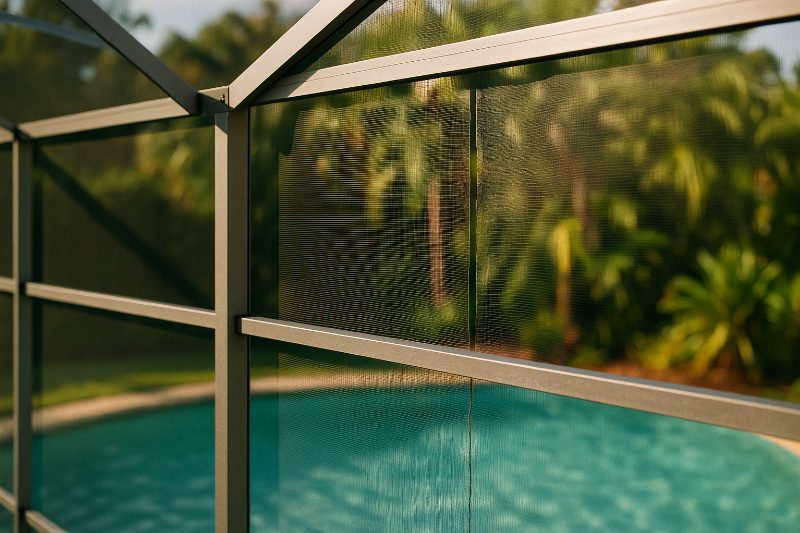
Your pool cage is showing its age, and now you're standing in the backyard trying to figure out whether you need a quick re-screen or a real structural repair. Getting that answer wrong in either direction costs you money - too little work and the problem comes back; too much and you've paid for things you didn't need.
This guide breaks the decision down into concrete, visual checks any homeowner can do. We'll cover what to look at, what each symptom means, and when it's time to call in a professional rather than guess.
Start with the Screen Itself
The most obvious thing to inspect is the screen mesh. Walk the full perimeter of your enclosure and look at every panel, not just the ones at eye level. Florida sun and salt air do a number on screen mesh over time, and damage is rarely limited to one spot.
Signs that re-screening alone will fix the problem:
- Small tears or holes, typically less than a few inches across, usually caused by a branch, a child's toy, or a bird strike
- Screen that has gone grey, stiff, or brittle (this is UV degradation - you can read more about why screen looks grey and brittle due to UV damage and why it happens faster in coastal communities like Siesta Key and Anna Maria Island)
- Sagging panels where the mesh has stretched away from the spline channel but the frame rail itself is straight
- Spline that has shrunk, dried out, and is no longer holding the screen edge firmly in the groove
- A single panel or two that took impact damage while everything around them looks fine
When the screen is the only thing failing and the aluminum frame is plumb, solid, and free of visible damage, re-screening is genuinely all you need. It is one of the most cost-effective repairs a homeowner can make, and a well-installed replacement screen in the right mesh weight will outlast the one it replaced - especially if you upgrade to a tighter weave that also helps keep no-see-ums out of your screened lanai.
Now Look Hard at the Frame
The aluminum frame is what gives your pool cage its structural integrity, and it deserves a careful look that goes beyond a quick glance. Give yourself fifteen minutes and work your way around the entire cage systematically.
What you're looking for in the frame:
- Bowing or bending in vertical posts. Stand at one corner and sight down the length of each post like you're looking down a pool cue. Any visible curve is a red flag.
- Bent or kinked horizontal rails. These are the horizontal members that run between posts and hold the screen panels. A slight bow after a storm means the frame absorbed significant force.
- Loose or missing hardware. Check every corner connector, mid-rail bracket, and base plate. Rattle each one gently. If a connector wiggles, the joint has failed and the whole section is weaker than it looks. Our guide to the anatomy of a pool cage frame, screen, spline, and hardware explains exactly how these pieces work together so you know what you're examining.
- Corrosion at the base plates. In communities close to salt water - Longboat Key, Lido Key, Palmetto near the river, and anywhere on Anna Maria Island - aluminum oxidizes faster than inland. White chalky buildup is cosmetic; actual pitting or flaking at the base plate where it meets the concrete deck is structural and needs professional evaluation.
- Cracked or spalling concrete anchors. Get down and look at the base of each post. The post sits in a concrete footing or is bolted through the deck. Cracks radiating outward from a base plate, or a plate that visibly tilts, means the anchor has been compromised.
- Roof screen panels that sag significantly. A small amount of give in overhead screen is normal. But if a roof panel sags several inches and you can see the frame member above it is no longer straight, the frame needs attention before new screen goes in.
If you find any of the frame issues above, do not simply re-screen over them. New mesh stretched onto a bent or loose frame will tear faster, sag prematurely, and may not survive the next storm season.
After a Storm: A Separate Checklist
Hurricane season runs through November, and even a strong afternoon thunderstorm can do structural damage to a pool cage. If you're assessing your enclosure after a named storm or a particularly bad squall, add these checks to your walkthrough.
Look for any section of frame that has shifted out of its original plane. A cage that was square and vertical before the storm should still be square and vertical. If a section leans, or if you notice daylight between a frame member and the concrete deck, the structure has moved.
Check whether any posts have separated at the joints. Storm wind loads can pull apart connections that otherwise looked fine. A connector that is still in place but cracked lengthwise has failed, even if the frame appears to be holding position.
Also check the roof framing at the ridge. That is typically the highest-stress area in wind events, and damage there is easy to miss until you're looking up at the right angle in good light.
For a full walk-through of what to do after a hurricane damages your enclosure - including what to document for insurance purposes - see our post on what to do after a hurricane damages your screen enclosure. If you end up filing a claim, our guide on filing a screen-damage insurance claim in Florida will help you understand what insurers typically look for.
When It's Both: Frame Repair Plus Re-Screen
Sometimes the honest answer is that you need both structural work and new mesh, and it's important to do them in the right order. Frame repairs always come first. Straightening or replacing frame members, resetting anchors, and replacing hardware all happen before a single panel of new screen goes in. Installing screen onto a frame that is still being worked on is a waste of materials.
Common scenarios where both are needed:
- A vehicle or large fallen branch has impacted the cage, bending one or two posts and tearing surrounding panels
- The enclosure is ten to fifteen years old, the frame shows general fatigue at connections, and the screen is also beyond its useful life
- A previous repair was done poorly - screen was patched over a damaged frame - and now everything needs to be addressed at once
- Significant rust or corrosion has eaten into one section of frame, meaning replacement of those members and then re-screening the affected panels
Getting a professional assessment in these situations matters. A technician can tell you whether a bent post can be straightened in place or needs to be replaced, which affects both cost and timeline.
What to Expect During a Professional Inspection
A thorough pool cage inspection should take at least thirty to forty-five minutes for an average-size enclosure. The technician should walk the full perimeter, check the roof panels, test every major connection point, and look at the base plates and anchors.
At the end of that inspection you should receive a clear explanation of what they found, broken into two categories: what is structurally necessary to address now, and what can be monitored or addressed later. Any company that immediately jumps to "you need a full replacement" without explaining exactly which frame members have failed deserves a second opinion.
You can see more about how we approach this kind of assessment on our about page, and you can review the full range of screen and pool-cage repair services we provide throughout the area.
Geographic Factors That Change the Equation
Where you live in the Suncoast area genuinely affects how fast your cage ages and what kind of damage is most common.
Coastal locations - Siesta Key, Lido Key, Longboat Key, Anna Maria Island - deal with salt-laden air year-round. Aluminum oxidizes faster, base plate corrosion is more common, and screen mesh tends to degrade more quickly. Homeowners in these areas should plan on inspecting their enclosure at least once a year, and frame hardware should be checked closely every couple of years.
Inland communities - Lakewood Ranch, Parrish, Ellenton - tend to see less salt corrosion but face intense afternoon convective storms in summer. High-wind events are a bigger structural concern. Screen and pool-cage repair in Lakewood Ranch and in Parrish often involves post-storm frame assessment more than corrosion-related frame work.
Bradenton and Palmetto sit somewhere in between - close enough to the bay and the river to see moderate salt exposure, but also in the path of strong inland storm activity. Screen and pool-cage repair in Bradenton covers a wide range of enclosure types and ages, from older aluminum cages near downtown to newer construction further east.
Knowing the specific pressures your location puts on your enclosure helps you prioritize which repairs are urgent and which can wait.
Making the Call
Here is a simple way to summarize the decision:
- Screen only failing, frame is solid - Re-screen. It is the right repair and good value.
- Frame has visible damage, bent members, failed connections, or compromised anchors - Frame repair is required first, and re-screening follows.
- Both are failing - Address them together, frame first, then screen.
- Unsure about the frame - Get a professional inspection before spending money on new screen. Installing mesh over a questionable frame is a short-term fix that sets you up for the same problem next season.
Our team serves homeowners across the Suncoast from Anna Maria Island down through Sarasota and all the communities in between. If you've done your walkthrough and still aren't certain what you're looking at, we're glad to take a look and give you a straight answer.
Visit our contact page to schedule an assessment or ask a question - no pressure, just an honest evaluation of what your enclosure actually needs.