How Often Should You Re-Screen a Florida Pool Cage?
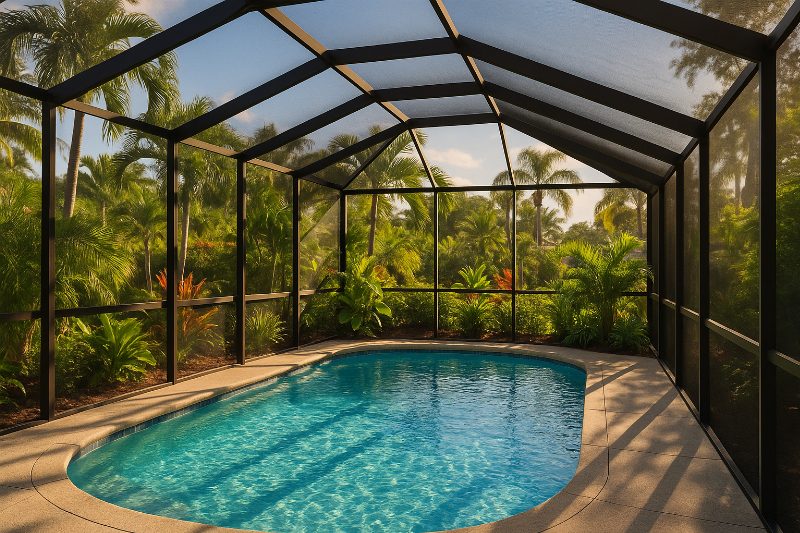
Your pool cage screen is working hard every single day, and most of it is invisible to you until something goes wrong.
Sunlight bakes it from above. Salt air drifts in from the Gulf and corrodes the mesh fibers from within. Storms throw branches, hail, and pressure against every panel. Frogs, lizards, and the occasional determined squirrel pick at the edges. And yet, the screen keeps bugs out, softens harsh afternoon glare, and makes your lanai a genuinely livable space for nine or ten months of the year. The least we can do is pay attention to how long it actually lasts.
The honest answer to "how often should you re-screen?" is somewhere between seven and fifteen years for most Florida homeowners, but that range is wide for good reasons. Where you live, what your cage faces, how well you maintain the frame, and what mesh type was originally installed all move that needle significantly. This post walks through each of those factors so you can make a confident, informed decision rather than guessing.
The Baseline Lifespan: What's Realistic in Florida
Standard fiberglass pool-cage screen, installed correctly with the right spline, typically holds up for seven to twelve years in our climate before it needs wholesale replacement. That's shorter than the fifteen-plus years you'll hear quoted in other parts of the country, and there's a specific reason: ultraviolet radiation.
Florida receives more UV exposure per year than almost anywhere else in the continental United States. UV degrades the binders in fiberglass mesh, making it brittle, discolored, and porous over time. If your screen has gone from charcoal grey to a washed-out pale grey or chalky white, UV oxidation is almost certainly the culprit. We wrote an entire post on this process if you want to understand the chemistry: Why Your Screen Looks Grey and Brittle: UV Damage Explained.
Heavy-duty or "Super Screen" mesh, which uses thicker strands and a tighter weave, can stretch that lifespan to twelve to fifteen years under similar conditions. It also does a better job blocking no-see-ums, which is a meaningful bonus for anyone with a cage near tidal water or a retention pond. The trade-off is slightly reduced airflow and a higher up-front material cost, though most homeowners along the coast consider it worth it.
What Shortens Screen Life in This Region
Proximity to Salt Water
If your home is on Anna Maria Island, Longboat Key, Lido Key, or Siesta Key, or within a few miles of any tidal water, salt is actively attacking your screen right now. Salt air doesn't just corrode aluminum frames; it works its way into the fiberglass mesh and weakens the structural integrity of individual strands. Coastal homeowners should plan on being at the lower end of the lifespan range, around seven to nine years, and should rinse their screens gently with fresh water two or three times a year to slow the process.
Storm Damage
A single bad storm can do what years of UV and salt cannot: tear panels cleanly, bend frame sections, and dislodge spline from its channel. If you're in Parrish, Ellenton, or eastern Bradenton, summer storm cells roll through regularly, and even storms that don't reach hurricane strength can send debris into a cage at damaging speeds.
It's worth understanding the difference between isolated storm damage and end-of-life replacement. A few torn panels after a storm can often be repaired selectively. But if a storm hits a cage that was already eight or nine years old and brittle, the smart move is usually a full re-screen. You'd be patching in new mesh next to screen that's ready to fail, and the patched panels will be obvious and mismatched for years. Our post on what to do after a hurricane damages your screen enclosure covers that decision in detail.
Tree Coverage and Organic Debris
Homes in Lakewood Ranch and Sarasota with mature oaks or palms overhanging the cage deal with a different kind of wear. Leaf debris, seedpods, and tannin-rich water sitting on screen panels accelerate breakdown. The organic material holds moisture against the mesh, which promotes mildew and can stain the screen permanently. If your cage sits under a canopy, plan on more frequent inspections and budget for re-screening closer to the seven-year mark.
Poor Original Installation
This is a factor homeowners rarely consider, but it matters. Screen that was under-tensioned during installation sags and tears earlier because it moves more in the wind. Spline that was too thin for the channel won't hold the screen edge firmly, and panels pop out or pull away from the frame. If your current screen was installed by the lowest bidder and it's already showing wear at four or five years, the installation quality, not just the age, may be the real issue. Understanding the anatomy of a pool cage frame, screen, spline, and hardware can help you evaluate what you're working with.
Signs It's Time to Re-Screen Now, Regardless of Age
Age is a useful guideline, but condition is what actually matters. Here are the signs that mean it's time to act, even if your screen is still "young":
- Visible holes or tears in multiple panels, not just one or two isolated spots
- Screen that sags or billows noticeably in mild wind, indicating failed tension or loose spline
- A chalky, pale, or grayish-white appearance across the majority of the mesh surface
- Bugs getting through even when no obvious hole is visible (this usually means the weave has opened up from UV degradation)
- Screen pulling away from the spline channel along edges or corners on multiple panels
- Dark streaking or mildew staining that won't come off with gentle washing
- Torn or bent frame sections that have compromised the alignment of the screen panels
If you're seeing two or more of these at the same time, a full re-screen is almost certainly more economical than repeated patching. Each patch introduces a new seam, a color mismatch, and additional labor cost. At some point the math simply favors starting fresh.
Re-Screening vs. Spot Repair: How to Decide
Not every damaged panel means a full re-screen is needed. A single tear from a branch, one popped panel after a storm, or a small hole near the door frame are all reasonable candidates for spot repair, especially if the rest of the cage is in good shape and relatively young.
The general rule most experienced screen contractors use: if more than about 20 to 30 percent of your panels need attention, a full re-screen is usually the better value. You'll get uniform color, consistent mesh tension across every panel, and you'll reset the lifespan clock rather than patching your way toward the same outcome in another year or two.
Our screen and pool-cage repair services cover both options, so if you're not sure which route makes sense for your cage, a quick inspection will usually make the answer obvious.
Does Location Within Our Service Area Change the Timeline?
Yes, in a meaningful way. Here's a rough breakdown by geography:
Coastal locations (Anna Maria Island, Longboat Key, Lido Key, Siesta Key, Nokomis, Osprey) tend to see the shortest screen lifespans because of salt air and higher humidity. Seven to nine years is a realistic expectation for standard mesh. Heavy-duty mesh and annual fresh-water rinses help extend that.
Inland suburban areas (Lakewood Ranch, Bradenton, Sarasota, Parrish, Palmetto, Ellenton) typically land in the eight to twelve year range for standard screen. Storm exposure is real but salt is less of a factor. Tree coverage and debris management matter more here.
Waterfront without tidal exposure (lakeside or pond-side homes throughout Lakewood Ranch and Parrish) sit somewhere in the middle. Moisture and algae are the primary accelerants. Good drainage around the cage and occasional rinsing help.
If you're in our Bradenton service area or over in Lakewood Ranch, we're familiar with the specific conditions in those communities and can give you a straight assessment of where your cage stands.
What About the Aluminum Frame?
Re-screening and frame replacement are separate conversations, and it's important not to confuse them. A well-built aluminum frame, properly maintained, can last twenty to thirty years or more. When you re-screen, you're replacing only the mesh and spline. The frame stays in place.
That said, if your frame has significant corrosion, bent uprights, or failed hardware at the connection points, those issues need to be addressed before or during a re-screen. Installing fresh screen on a compromised frame is a short-term fix at best. Any reputable contractor should do a frame inspection before quoting a re-screen job, and they should tell you plainly if they find anything that needs attention.
If you have questions about what's covered under homeowner's insurance after a storm event, our post on filing a screen-damage insurance claim in Florida is a practical starting point before you call your agent.
What to Expect When You Schedule a Re-Screen
For a typical single-story pool cage, a full re-screen is usually completed in a single day. The crew removes all existing screen and spline, inspects the frame, installs new spline in the channels, cuts and tensions new mesh panel by panel, and trims the excess. You'll want to keep pets and young children away from the work area during the job.
Before the crew arrives:
- Clear the pool deck of furniture, potted plants, and decorations
- Note any specific panels that have been problematic so you can point them out
- Ask about mesh options if you have preferences (standard fiberglass, heavy-duty, or privacy screen - there's a good comparison of privacy screen options in our post on Florida glass vs. privacy screen for your lanai)
After the job is done, give the screen a few days to fully seat before you rinse it, and check all the panel edges by running your hand lightly along the spline line to confirm everything is tight.
A Simple Maintenance Habit That Adds Years
Re-screening on a fixed schedule isn't actually the smartest approach. Inspecting your screen regularly and catching small problems early is far more economical than ignoring the cage until something fails dramatically.
Twice a year, walk the perimeter of your cage slowly and look for:
- Small tears or pinhole clusters
- Spline that's starting to back out of its channel
- Discoloration or sagging in individual panels
- Any area where the screen contacts something it shouldn't, like a tree branch or furniture edge
Catching a single failing panel early, before it tears wide open in a storm and puts stress on adjacent panels, is the single best thing you can do to stretch the interval between re-screens. Combine that with the occasional gentle rinse to remove salt, pollen, and debris, and you'll consistently get the most out of whatever mesh you have installed.
Ready to Find Out Where Your Cage Stands?
If your pool cage is approaching the seven-year mark, or if you're already noticing the signs of wear described above, the next step is straightforward. A visual inspection by an experienced screen contractor takes about fifteen minutes and gives you a clear picture of what you're working with.
We serve homeowners across the Suncoast, from Sarasota and Siesta Key north through Bradenton, Parrish, Palmetto, Ellenton, and out to Anna Maria Island. If you're ready to schedule an inspection or get a quote for re-screening, reach out to us here and we'll get back to you promptly. You can also browse answers to our most common re-screening questions on the FAQ page if you'd like to do a little more research first.
The screen on your pool cage is doing quiet, thankless work every day. Giving it a proper evaluation every few years, and replacing it on time, means your lanai stays comfortable, bug-free, and genuinely enjoyable for years to come.