Getting your pool cage ready before you sell your home
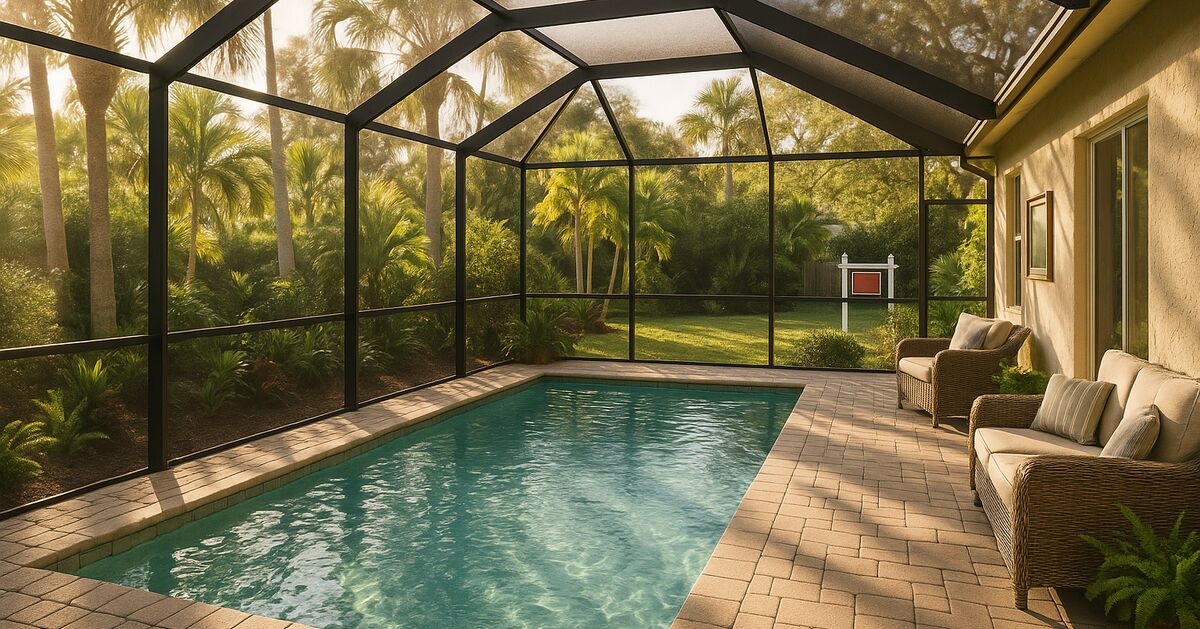
A torn screen panel or a rust-streaked frame is one of the first things a buyer's inspector will flag, and it is often one of the last things a seller thinks to fix before listing. On the Suncoast, where a screened pool cage is practically expected in every backyard, the condition of that enclosure can shift a buyer's offer, or kill their enthusiasm entirely, before they ever step inside the house.
This guide walks you through exactly what to assess, what to repair, what to leave alone, and how to present your pool cage so it becomes an asset rather than a line item on the inspection report.
Why buyers (and inspectors) focus on the pool cage
Real estate buyers in Bradenton, Lakewood Ranch, Sarasota, and along the barrier islands have learned to scrutinize screen enclosures. A pool cage represents meaningful ongoing maintenance, and buyers know it. When a buyer sees torn screens, orange rust streaks, bent frame members, or a door that scrapes and sticks, their brain immediately starts calculating what it will cost them to fix everything. That mental math almost always lands higher than the actual repair cost, because uncertainty is expensive in a buyer's mind.
Home inspectors are trained to note deferred maintenance, and a deteriorating pool cage is a textbook example. When it shows up in the inspection report, it hands the buyer a negotiating chip. Even if the cost to fix is modest, the buyer may request a price reduction, a repair credit, or a combination of both. Worse, some buyers will simply walk away if the overall picture of the home suggests years of deferred upkeep.
The good news is that pool-cage repairs are almost always straightforward, predictable in scope, and fast to complete when handled by a professional. You do not need a perfect enclosure; you need a clean, solid, properly functioning one. There is a meaningful difference between those two things, and understanding it will help you spend wisely before listing day.
Start with an honest walk-around
Before you call anyone or spend a dollar, do your own inspection. Walk the perimeter of the cage slowly, in good daylight, and look at every panel, every corner, every door, and every foot of frame. Keep a simple notepad or phone note going. Here is what to look for:
- Screen panels. Check for tears, holes, pet damage, or panels that are sagging and pulling away from the spline channel. Even a small hole in a corner is worth noting, because buyers will find it.
- Spline. The rubber cord that holds the screen in the frame channel can harden, crack, and shrink over time in Florida's heat. If panels look loose or are popping out, spline failure is usually the reason.
- Frame members. Look for bent or bowed aluminum horizontals and verticals. Minor bowing can be cosmetic, but significant bends or cracked welds are structural concerns.
- Rust. Surface rust staining on aluminum is extremely common on the Gulf Coast, especially on homes near Longboat Key, Lido Key, Anna Maria Island, and other salt-air environments. Know the difference between surface oxidation (a cosmetic issue) and deep pitting or corrosion that has compromised the metal's integrity.
- Doors. Open and close every screen door. Does it latch cleanly? Does the closer work? Does the door drag on the track or frame? A sticky, unlatching door is a small thing to fix and a surprisingly big thing for buyers to notice. For a deeper look at what typically goes wrong, our post on common screen-door hardware problems and how they get fixed covers the most frequent culprits.
- Base and footer condition. Check the aluminum base rail at the bottom of the cage where it meets the pool deck. This area collects moisture and debris and often shows the earliest signs of corrosion.
- Ledger and attachment points. Where the cage frame attaches to the house, look for gaps, loose fasteners, or signs that the connection has shifted.
Write everything down. Then divide the list into two columns: things that are genuinely broken or obviously damaged, and things that are worn but still functional. The first column is your repair list. The second column requires a judgment call about return on investment.
The repairs that are always worth doing before you list
Some repairs make a clear financial and presentation sense. These are the ones to prioritize:
Torn or missing screen panels. This is the most visible form of damage and the easiest for a buyer to see from twenty feet away. Re-screening individual panels is relatively affordable, and a fresh panel is dramatically cleaner-looking than even a well-patched one. If several panels are torn, re-screening the entire cage section they belong to is often smarter than doing them one by one.
Broken or non-functioning screen door hardware. Latches, closers, handles, and hinges are inexpensive parts. A door that swings freely, latches firmly, and closes itself with a soft click signals that the home has been cared for.
Visible rust staining on the frame. Surface oxidation can be treated, and the improvement in appearance is significant. For homes with more advanced corrosion issues, our in-depth guide on rust on your pool cage: causes, cures, and prevention explains what is fixable and what signals a deeper problem.
Popped or sagging screens from failed spline. These look neglected even when the screen material itself is still intact. Replacing the spline is a straightforward repair that makes a real difference in how the cage reads visually.
Any panel with a significant tear in the corner. Corner tears are not just cosmetic; they tend to propagate quickly and can indicate stress on the frame. We wrote specifically about what that tear in the corner of your cage really means, and it is worth understanding before an inspector explains it to your buyer.
What you can reasonably leave alone
Not every imperfection needs to be corrected before listing. Minor surface scuffs on the frame, very slight bowing on a horizontal member that is not structurally significant, or a small amount of oxidation in a low-visibility area may simply not move the needle enough to justify the cost. The goal is to eliminate obvious problems and visible deferred maintenance, not to deliver a brand-new enclosure.
That said, if you are unsure whether something rises to the level of a repair, err on the side of fixing it. The carrying cost of an unsold home almost always exceeds the cost of a screen repair.
Get the work done before the listing photos
This point matters more than most sellers realize. Listing photos are the first showing for nearly every buyer today. A screen cage with torn panels, orange stains, or a visibly sagging door panel will appear in those photos and on every real estate website for the duration of your listing. Buyers will form an impression before they ever schedule a tour.
If your repairs are complete before the photographer arrives, you get the benefit of a clean, well-maintained enclosure in every image. That presentation communicates something beyond the cage itself; it tells buyers that the whole property has been taken care of.
On the other hand, completing repairs after the listing is live requires updated photos, and many sellers skip that step, leaving outdated images up for the rest of the campaign.
Timing your repairs: how far in advance to schedule
For minor repairs, including patching a few panels, replacing door hardware, and treating surface rust, scheduling two to three weeks before your target listing date gives comfortable breathing room. Most screen-repair professionals can complete standard work within a day or two once on site.
Larger projects, like a full cage re-screen or addressing frame damage from a prior storm, deserve more lead time. Four to six weeks is a reasonable buffer, particularly during busy stretches of the year. If you are in Parrish, Ellenton, Palmetto, or other areas where demand for exterior work surges in the spring selling season, booking early is a practical advantage.
For a realistic picture of scheduling and turnaround, our real-world guide on how long a screen repair actually takes breaks down timelines by job type.
How to talk about the cage with buyers
Once the repairs are done, be ready to speak to them. If you re-screened panels, note when it was done. If you had frame work addressed, mention it. Buyers and their agents appreciate sellers who can say, "We just had three panels replaced and the door hardware serviced last month," far more than sellers who shrug and say the cage is "in good shape."
Keep any invoices or receipts from the work. These become part of the disclosure packet and demonstrate the care you have put into the property. A $400 repair documented with a professional invoice reads very differently to a buyer than the same repair undocumented. It is evidence of a maintained home.
The specific challenges on the barrier islands and coastal areas
If your home is on or near Anna Maria Island, Longboat Key, Lido Key, Siesta Key, or Nokomis, the salt-air environment accelerates corrosion on aluminum frames and hardware in ways that are genuinely faster than inland properties. Buyers purchasing in these markets often know this and will look more closely at the cage. The good news is that buyers in these coastal markets are also more accustomed to paying for updated, properly maintained enclosures and understand the cost of upkeep.
If you are selling a coastal property, treat the pool cage inspection and repair as a slightly higher priority than you might for an inland home. The return on a clean, well-maintained cage is proportionately higher in these markets. Our screen and pool-cage repair services cover the full range of what these coastal properties typically need.
Think about curb appeal from the backyard
In Florida, the pool and lanai area is the functional heart of the home. It is where buyers spend real mental energy during a showing, imagining themselves and their families. A pool cage that is clean, tight, and properly screened makes the whole outdoor space feel larger, more private, and more inviting. A damaged cage shrinks the buyer's imagination and their offer.
The Suncoast homeowners' screen-enclosure maintenance checklist is a good resource if you want to go beyond the basics and make sure nothing has been overlooked before you open the home to buyers.
A quick note on pest control and screening quality
One detail that savvy buyers sometimes raise: is the mesh fine enough to keep out no-see-ums? In some parts of the Suncoast, particularly near water in Osprey, Nokomis, and the barrier islands, no-see-um mesh is considered the better-quality standard. If your cage is already screened with fine-mesh material, that is worth mentioning. If it is not, it is rarely a dealbreaker but can be a simple upgrade to offer during negotiations.
How to get started
The simplest path forward is a professional assessment of the cage before you decide what to repair. A screen-repair professional can walk the enclosure with you, identify what genuinely needs attention, and give you a clear picture of cost and timeline so you can make smart decisions about what to address before listing. You can reach our team through the contact page to schedule an assessment, or visit our locations page to confirm we serve your area.
Whether your home is in Bradenton, Lakewood Ranch, Sarasota, or anywhere across the Suncoast, a few targeted repairs to the pool cage can pay for themselves several times over at the closing table. The math almost always works in the seller's favor, and the peace of mind of going into an inspection with a solid enclosure is worth something too.