How long does a screen repair actually take? A real-world guide
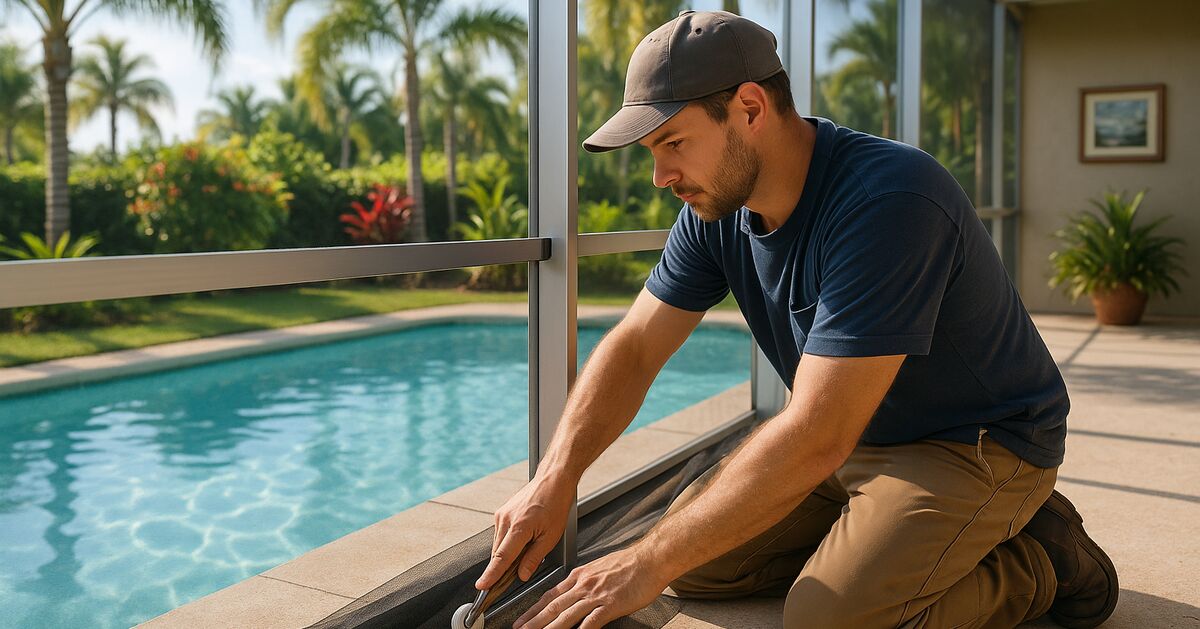
Most screen repairs are finished faster than homeowners expect, and a few take much longer. Knowing which side of that line your job falls on saves you from either rearranging your entire week or being caught off-guard when the crew needs a second visit.
This guide walks through the realistic timelines for every common type of screen repair we see across the Suncoast, from a single torn panel on a Siesta Key lanai to a full-section rebuild on a Lakewood Ranch pool cage. More importantly, it explains why certain jobs take the time they do, so you can plan your day with confidence.
The short answer: most single-panel repairs take under an hour
For a straightforward screen repair, meaning one or two panels with clean frames, good spline channels, and no hardware issues, a skilled technician can be in and out in 30 to 60 minutes. That includes setup, cutting the new mesh to size, seating the spline, trimming the excess, and a final tension check.
That speed is not a shortcut. A well-practiced installer simply has the motion economy to work efficiently. Rushing the spline into the channel or skipping the tension check, on the other hand, is how you end up with a panel that sags or pops back out within a month. If you want to understand why tension matters so much, our post on why properly tensioned screen matters more than you think goes deep on the mechanics.
The catch is that "straightforward" covers fewer jobs than most people assume. Florida's climate adds complications that don't exist in drier states, and the Suncoast's salt air, intense UV, and storm seasons all have a habit of turning a simple repair into a slightly bigger one once the technician is on-site.
Job-by-job time estimates
Here is a realistic breakdown by job type. These ranges assume good access to the enclosure, all materials on hand, and no surprises hidden inside the frame.
Single screen panel replacement
- Typical time: 30 to 60 minutes
- This is the most common call we get. A single panel, whether it's a lanai side wall or a roof section, can usually be handled in one visit with material already on the truck.
Two to five panels in the same section
- Typical time: 1 to 2.5 hours
- Multiple panels in one run of the frame go quickly because the setup cost (unloading, staging, measuring) is shared across the work. Five panels rarely take five times as long as one.
Full side-wall re-screen (6 to 15 panels)
- Typical time: 3 to 6 hours, often a full half-day
- At this scale, the job usually warrants a two-person crew. One person feeds and tensions the screen while the other seats the spline. A two-person team is also safer when working on elevated sections of a pool cage.
Full pool cage re-screen (all sections)
- Typical time: 1 to 3 days depending on size
- Large pool cages common in Parrish, Bradenton, and Lakewood Ranch can have 40 or more individual panels plus a roof field. A complete re-screen is a multi-day project. Our overview of re-screening a whole pool cage gives a useful framework for what to expect at that scale.
Screen door repair or hardware replacement
- Typical time: 45 minutes to 2 hours
- Screen doors carry more variables than fixed panels: hinges, closers, latches, tension adjusters, and the door frame itself can all need attention. A door that is simply re-screened runs on the fast end; a door with a bent frame or seized hardware runs longer.
Structural frame repairs combined with screen work
- Typical time: half a day to multiple visits
- If the aluminum frame has been bent by a falling branch, corroded through at a joint, or damaged in a storm, the screen work cannot begin until the frame is right. Frame repairs sometimes require welding, specialty extrusion, or parts that need to be ordered, which can add days between visits.
What makes a repair take longer than expected
Hidden spline channel damage
The spline channel is the groove that locks the screen mesh in place. On older enclosures, particularly those more than 10 to 15 years old, this channel can be cracked, flattened, or filled with years of debris and oxidation. A technician discovers this after the old screen comes out. Re-forming or replacing the channel adds time and sometimes material cost, but skipping it means the new screen will not stay put.
Roof panels
Screen roof panels are the same material as wall panels, but working overhead on a ladder or scaffold takes longer and requires more care. A single roof panel that would take 20 minutes on a ground-level wall might take 40 minutes overhead. On larger cages with steep pitch, roof work can add significantly to the total job time. Homeowners near the coast, particularly on Anna Maria Island and Longboat Key, often see more roof damage because wind-driven debris hits the top of the cage first.
Rust and corrosion at the frame joints
Salt air is hard on aluminum hardware, especially the self-tapping screws and cross-member connections that hold the frame together. When a screw has rusted into its hole, removing it safely without stripping the frame takes patience. Forcing it risks cracking the extrusion, which turns a small delay into a structural repair. Our deep dive on rust on your pool cage explains exactly why this happens and what can be done to slow it down.
Access and landscaping
A pool cage surrounded by close-planted palms, overgrown bougainvillea, or a tight fence line takes longer to work around. Technicians need enough room to extend a ladder safely and maneuver a full roll of screen material. If your enclosure has restricted access, letting us know before the appointment helps us plan the right crew size and equipment.
Screen mesh type
Standard fiberglass mesh installs quickly. Heavier materials, such as pet-resistant polyester or the finer weave of no-see-um screen, require more tension to seat properly without warping the panel. They also dull cutting tools faster. Expect to add 15 to 30 percent to the baseline time estimate if you are upgrading to one of these specialty meshes. Our guide on choosing the right screen mesh for your Florida home can help you weigh the trade-offs before you commit.
Storm damage with secondary issues
After a named storm, screen damage often comes with companion problems: bent frame sections, debris lodged in the spline channel, or fasteners sheared off entirely. What looks like a three-panel repair from the outside sometimes reveals a compromised frame section once the damaged mesh is removed. Storm-season repairs routinely take longer than equivalent damage from normal wear, and it is worth scheduling a thorough inspection rather than a quick patch if your enclosure took a hit.
What you can do to help the job go faster
A few simple things on your end make a real difference:
- Clear the area around the enclosure. Move patio furniture, potted plants, and any stored items away from the panels being repaired. Give the technician a clear 3-foot working perimeter.
- Unlock any gates or pool enclosure doors before the crew arrives. Waiting for access eats into the clock.
- Note which panels are damaged and write it down or take a photo to share. Pinpointing the work in advance skips the full walk-around assessment.
- Tell us about rust, past repairs, or frame issues when you call. That information helps us bring the right materials and, if needed, the right crew size.
- Be available for a quick decision if the technician finds something unexpected. A two-minute conversation on-site is much faster than a callback loop that delays the job by a day.
Same-day vs. scheduled repairs
For homeowners in areas we serve regularly, including Bradenton, Sarasota, Ellenton, and Palmetto, same-day service is often possible for small repairs, especially mid-week when scheduling allows. Larger jobs, specialty mesh orders, or anything requiring structural work will need a scheduled appointment with a lead time for materials.
After storms, demand spikes across the Suncoast simultaneously, and wait times extend. If your enclosure took storm damage, calling early, even before you have fully assessed the extent, helps you get onto the schedule before it fills. Our contact page is the fastest way to reach us.
The inspection step you should not skip
Before any repair begins, a good technician walks the full enclosure, not just the panel you called about. Tears and holes are easy to spot, but spline that is about to give way, corners under tension stress, or early-stage frame corrosion are not. Catching a developing problem during a repair visit costs nothing extra and can prevent a more urgent call later.
If you want to do your own walk-around between visits, our screen-enclosure maintenance checklist for Suncoast homeowners gives you a practical framework for what to look for and how often.
Planning your day around the repair
Here is a simple way to block your schedule based on job size:
- 1 to 3 panels: Block two hours. The work will likely finish sooner, but the buffer handles surprises.
- 4 to 10 panels: Block a half day. Plan to be home but not idle; most of this work does not require your active involvement once you have let the crew in.
- Full re-screen or storm damage: Treat it like a multi-day project. The crew will typically complete sections each day and protect open areas if work must pause overnight.
You do not need to watch over the work, but being reachable by phone during the job is genuinely helpful. If the technician opens up a panel and finds a frame issue, a quick yes-or-no from you on whether to proceed with that repair or schedule it separately can keep everything moving.
The bottom line
A single-panel screen repair is one of the faster home repairs you will have done. Most Suncoast homeowners are back to using their lanai or pool area by mid-morning. Larger jobs scale predictably, and the variables that add time, such as rust, roof access, and storm damage, are things a good technician will flag before the work begins, not after.
If you are weighing whether to repair or go bigger, our screen repair and enclosure services page lays out what we handle and can help you figure out the right scope before you commit. And if you have questions that are not covered here, our FAQ is a good next stop.
The repair does not have to disrupt your whole week. It just has to be planned honestly, and that starts with knowing what you are actually dealing with.