Why a screened lanai is perfect for Gulf-coast living
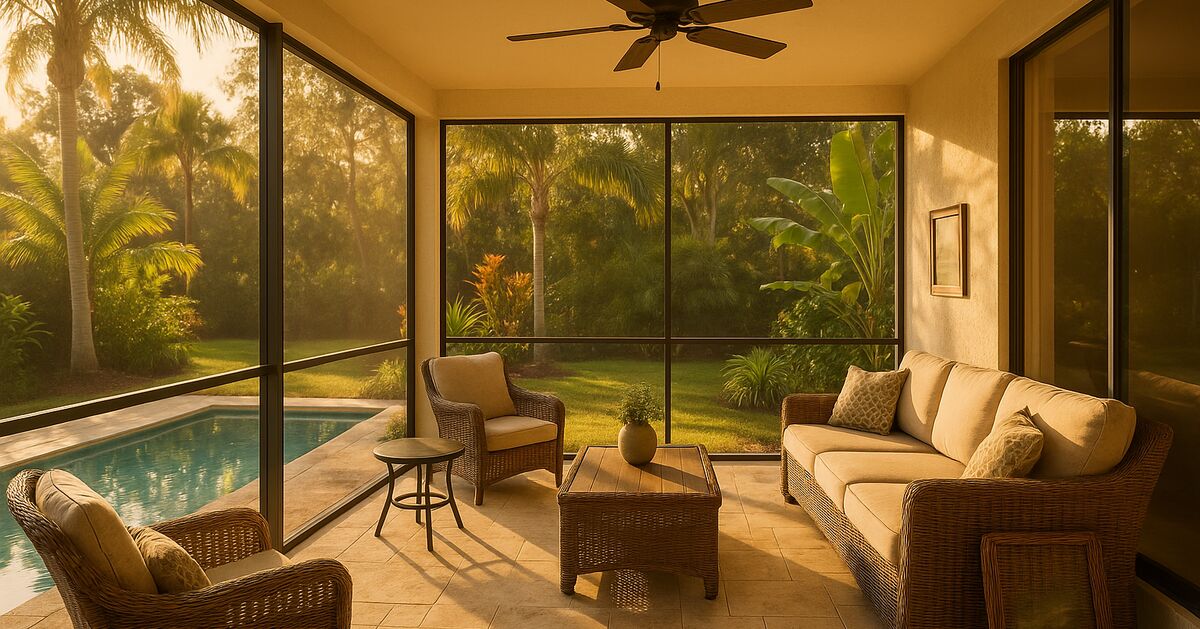
Florida sunsets from your own backyard are genuinely hard to beat, but the mosquitoes, no-see-ums, afternoon thunderstorms, and punishing UV rays can turn an outdoor evening into a retreat indoors within minutes. A screened lanai changes that equation entirely.
If you live anywhere along the Gulf coast, from Parrish and Palmetto in the north down through Bradenton, Lakewood Ranch, Sarasota, Siesta Key, and all the way to Osprey and Nokomis in the south, a screened lanai is less of a luxury and more of a practical necessity. This post digs into exactly why that is, and what makes a well-built, well-maintained screen enclosure one of the most worthwhile features a Florida home can have.
What a screened lanai actually is
The word "lanai" is borrowed from Hawaiian and simply means a covered outdoor living space. In Florida, it almost always refers to a patio or pool area enclosed with an aluminum-framed screen structure. Some lanais wrap around a pool. Some are purely a patio space off the back of the house. Others cover an outdoor kitchen, a dining area, or a combination of all three.
The defining feature is the screen itself: a fine mesh stretched tightly across aluminum frames that lets air and light through while blocking insects, debris, and a meaningful portion of the sun's intensity. That combination is exactly what Gulf-coast living demands.
You can learn more about the full range of screen and pool-cage repair services we provide, but the value of the structure starts with understanding what it does for you day to day.
The insect problem on the Gulf coast is real
People who move to the Suncoast from northern states are often surprised by how aggressive the insect pressure is. Mosquitoes are the obvious offender, but the no-see-ums (biting midges, technically) are often worse. They are small enough to pass through ordinary window screen mesh, they peak at dawn and dusk exactly when you want to be outside, and their bites are disproportionately irritating.
Add in palmetto bugs, wasps building nests under eaves, and the general abundance of flying insects that come with a warm, humid, coastal climate, and you start to understand why screened outdoor living became a defining feature of Florida home design.
A properly built lanai screen keeps all of those pests out. The frame seals tightly to the house, the door has a sweep and self-closing hardware, and the mesh itself is rated to stop even the smallest biting insects when you choose the right product. Choosing the right screen mesh for your Florida home matters more than most homeowners realize, since mesh density and material vary quite a bit between products.
Sun management without sacrificing airflow
The Gulf coast sun is intense. UV index readings in the 10-to-11 range are common in Sarasota and Bradenton during summer, and direct sun exposure on an unshaded patio makes outdoor furniture fade, surfaces bake, and people uncomfortable within minutes.
Screen mesh blocks a portion of solar radiation while still allowing air to move freely. Depending on the mesh type you choose, a screen enclosure can reduce solar heat gain noticeably, making the space usable during hours that a fully exposed patio would be unbearable. The air circulation is a key piece here: unlike glass enclosures, screens let the Gulf breeze do its work. On Anna Maria Island or Longboat Key, where the sea breeze is reliable and cooling, a screened lanai captures that airflow beautifully while still providing shade and insect protection.
This is a fundamentally different experience from sitting inside with air conditioning. The lanai lets you feel like you are outdoors, because you essentially are, just without the things that drive you back in.
Rain protection that extends your usable season
Florida's rainy season runs roughly from late May through September, and afternoon thunderstorms are almost a daily event. A covered lanai, meaning one with a solid roof panel or an opaque upper section above the screen, keeps the furniture dry and the floor usable even during those quick but heavy downpours.
Many Suncoast homeowners set up their lanais as genuine second living rooms: outdoor sofas, ceiling fans, televisions, outdoor rugs. None of that is practical on an unprotected patio. The covered lanai structure makes it work because the furniture and the people inside it stay dry.
Even during storm season, a well-built and properly maintained enclosure gives you a place to sit outside and watch the rain roll across the Gulf, which is one of Florida's genuinely spectacular shows.
Salt air and coastal durability: what to expect
Living near the water on the Gulf coast means your home's metal components are under constant salt-air attack. Aluminum frames fare reasonably well compared to steel, which is why quality pool cages and lanai frames are built from aluminum rather than iron or mild steel. But even aluminum can oxidize, and the hardware, specifically the screws, hinges, door closers, and brackets, is more vulnerable than the frame itself.
On barrier islands like Siesta Key, Lido Key, and Anna Maria Island, or anywhere within a mile or two of the bay and Gulf shoreline, this corrosion process accelerates significantly. Homeowners in those locations should inspect their enclosures at least once a year and watch for early rust bleed, which usually starts at fastener points before spreading.
The good news is that regular maintenance keeps a well-built lanai enclosure functional for many years. Our screen-enclosure maintenance checklist walks through exactly what to look for and how often to look for it.
Privacy and a sense of enclosure
Beyond bugs and sun, there is something less tangible but genuinely valuable about a screened lanai: it creates a defined outdoor room. The screen structure gives the space a sense of enclosure that an open patio simply does not have. You feel settled in rather than exposed. Neighbors and passersby see less of you. The kids and pets stay contained without additional fencing.
For homeowners in denser communities around Lakewood Ranch or Ellenton, where lots are close together, that visual separation makes a meaningful difference in how comfortable and private outdoor living feels. Even a light-density screen mesh creates a soft visual buffer while still allowing the view and the breeze to come through.
The pool safety and cleanliness factor
If your lanai encloses a pool, the screen enclosure is doing even more work. It keeps out leaves, pine needles, seed pods, bird droppings, and debris that would otherwise land in the water and clog your filtration system. Less debris means less chemical imbalance, less cleaning time, and lower maintenance costs over time.
From a safety standpoint, a fully enclosed pool cage with a self-latching door also acts as a meaningful barrier. It is not a substitute for other pool safety measures, but it adds one more layer between small children and the water.
Our team handles screen and pool-cage repair across all Suncoast service areas, so if your enclosure has damage that is compromising either the debris-blocking function or the structural integrity of the frame, that is worth addressing promptly rather than letting it go.
How a screened lanai holds up through storms
Gulf-coast homeowners naturally worry about hurricanes and tropical storms. A screen enclosure is designed to flex under wind loads rather than resist them rigidly. When a storm is approaching and conditions are forecast to be severe, many homeowners and contractors recommend removing or rolling up screens or at minimum accepting that some panels may tear, because a torn screen releases wind pressure across the frame rather than letting it build to the point of structural failure.
Screens are designed to be replaced. Frames are designed to last. A torn screen after a storm is a maintenance issue, not a structural catastrophe, as long as the frame itself remains intact and properly anchored. If you find yourself dealing with post-storm damage, understanding what a tear in the corner of your cage really means can help you assess whether you are looking at a straightforward re-screen or a deeper repair need.
Year-round outdoor living: the real payoff
People who move to the Suncoast from colder climates are often motivated by the idea of living outdoors year-round. The reality of Florida summers can feel like a setback to that dream if you do not have the right setup. An unprotected patio is too hot, too bug-ridden, and too unpredictably rained-on to serve as a real outdoor living space for most of the year.
A screened lanai closes that gap. The winter months, roughly November through April, are as close to perfect outdoor living as exists anywhere in the country. Cool nights, low humidity, barely any rain, and warm sunny afternoons. During those months, a screened lanai is genuinely one of the most comfortable places to be.
During the summer, the screen filters the sun, keeps the insects out, and lets the sea breeze do the cooling. You still need a ceiling fan and a cold drink, but you can actually sit outside at 7 p.m. in August without being eaten alive, which is not something you can say about an unscreened patio anywhere on the Gulf coast.
Keeping your lanai in top shape
A screened lanai only delivers on its promise if it is in good working order. Torn panels let insects in. A sagging screen door that does not close fully defeats the purpose of the enclosure. Corroded hardware weakens the frame anchoring over time. These are not cosmetic issues. They are functional ones.
The most common repairs we see on Suncoast lanais include torn or sagging screen panels, spline that has dried out and let panels pop loose, door hardware that no longer latches cleanly, and frame corrosion at fastener points near the roofline. Most of these are relatively straightforward to address when caught early, and catching them early is mostly a matter of doing a simple visual check a couple of times a year.
If you want to understand what proper screen tension looks like and why it matters, why properly tensioned screen matters more than you think is a good place to start. Tension affects not just appearance but how well the screen holds up over time and how effectively it seals against insects.
What to do next
Whether you have a lanai that needs repair, you are thinking about upgrading your existing screen, or you are new to Suncoast living and trying to understand what you have got, the most useful first step is a straightforward inspection.
We work with homeowners throughout Bradenton, Lakewood Ranch, Sarasota, Longboat Key, Lido Key, Anna Maria Island, Siesta Key, Palmetto, Parrish, Ellenton, Nokomis, and Osprey. If your enclosure has damage or you are not sure whether it is holding up the way it should, get in touch and we can take a look.
A screened lanai done right is one of the best parts of living on the Gulf coast. It is worth keeping it that way.