How to Stop Your Screen Door from Sagging and Sticking
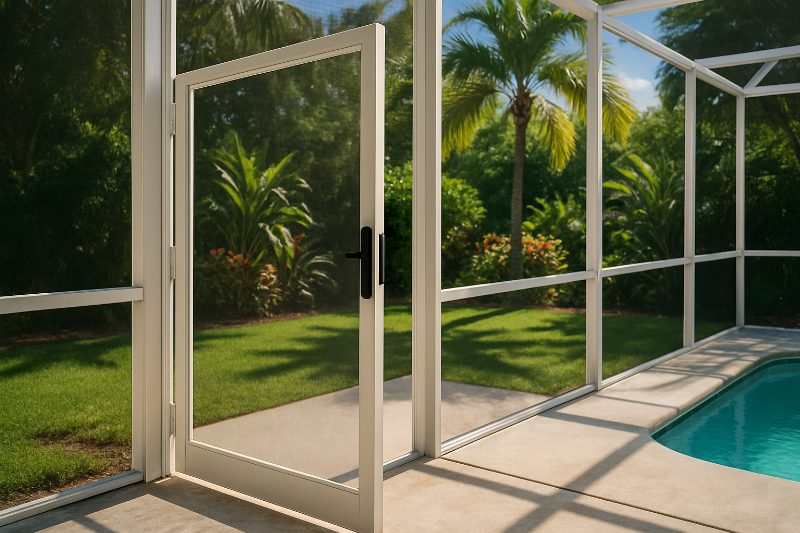
A screen door that drags, sticks, or swings crookedly is one of those problems that starts as a minor irritation and quietly turns into a real headache. In Florida's heat and humidity, small alignment issues compound fast, and what was a slight rub in January can become an unusable door by July. The good news: most sagging and sticking problems come from a short list of causes, and once you know what you're dealing with, the fix is usually straightforward.
This guide walks through every common reason a screen door sags or sticks, how to diagnose which one you have, what you can do yourself, and when it makes more sense to call in a pro.
Why Screen Doors Sag and Stick in the First Place
Screen doors - especially the aluminum-framed ones common on lanais, pool cages, and screened porches across Bradenton, Sarasota, and Lakewood Ranch - are lightweight by design. That's a feature: a heavy door would stress the screen enclosure frame and make latching hardware work harder. But lightweight aluminum frames are also more vulnerable to the forces that cause misalignment.
Here are the core culprits:
- Loose or worn hinges. Hinges are the single most common cause of a sagging door. Every time someone opens or closes the door, the screws in the hinge plates work against the aluminum frame. Over months and years, those screw holes enlarge slightly, the hinge tilts, and the door drops on the latch side.
- Frame warping from heat. Florida summers are brutal. Aluminum expands noticeably in direct sun, and if a door frame is in full afternoon exposure, the expansion and contraction cycle can cause it to bow out of square. A door that closes fine in the morning may bind by mid-afternoon.
- Damaged or compressed weatherstripping and brush seals. Many screen doors have a foam or brush seal along the edges to improve the bug-tight seal. When those seals compress or swell with moisture, they create extra friction that feels like sticking even when the frame geometry is fine.
- A bent or twisted door frame. A hard impact - a strong gust of wind that blew the door open too far, a bicycle handle, a lawn chair catching the corner - can permanently bend the aluminum frame. Even a small twist in the frame causes binding at the top or bottom corner.
- Enclosure frame settlement. Pool cage and lanai enclosure frames aren't perfectly rigid forever. Ground settlement, post corrosion, or storm damage can shift the opening slightly out of square, so a door that was hung correctly no longer fits the opening it lives in. You can read more about how enclosure frames are put together in our post on the anatomy of a pool cage: frame, screen, spline, and hardware, which helps explain why the surrounding structure matters so much for door performance.
- Worn or broken rollers and pivot pins. Some screen doors hang on pivot pins at the top and bottom rather than traditional butt hinges. When those pins wear or the pivot cups crack, the door drops or tilts.
Diagnosing the Problem Before You Touch Anything
Grab a friend and a pencil. Open the door fully and watch it: does it swing freely, or does it drag? Note exactly where the drag is - top corner, bottom corner, middle of the latch edge, or somewhere along the hinge side. That location tells you a lot.
Then close the door slowly and look at the gap between the door frame and the enclosure frame all the way around. In a well-aligned door, that gap is consistent - typically 1/8 inch to 3/16 inch. If the gap is wide at the top-latch corner and tight (or non-existent) at the bottom-latch corner, the door has dropped on the latch side, which almost always means hinge trouble. If the gap is consistent but the door still sticks, you're looking at a seal issue, a warped frame, or a shifted enclosure opening.
Also check the hinges themselves. Open the door to 90 degrees and grab the latch edge with both hands. Try to lift it slightly and wiggle it. Any noticeable movement at the hinge plates means loose screws or worn hinge leaves.
Finally, look at the corners of the door frame. Aluminum frames are assembled with corner connectors, and over time those connectors can work loose. A frame that has lost its corner connection will rack (twist into a parallelogram shape) and bind in the opening even though nothing is technically broken.
The Fixes: From Simple to More Involved
Fix 1: Tighten (or Re-anchor) the Hinges
This is always the first stop. Remove the hinge screws one at a time, insert a toothpick or a wooden matchstick (snapped off flush) with a dab of wood glue into the hole, let it dry, then re-drive the screw. That fills and hardens the enlarged hole so the screw bites again.
If the screw holes are badly stripped, you have a couple of options: use a slightly longer screw of the same diameter to reach fresh aluminum, or use a pop rivet instead of a screw for a permanent fix. Rivets are extremely common in screen enclosure work and hold extremely well.
After re-anchoring, check the hinge alignment. Most screen door hinges are adjustable to some degree. Look for a horizontal slot in the hinge leaf that allows you to shift the door slightly up or down before you fully tighten. Use that adjustment to bring the door back into square before locking everything down.
Fix 2: Adjust the Pivot Pins
On pivot-hung doors, look for a hex set screw on the bottom pivot. Loosening it allows you to raise or lower the door. Turn it in small increments (a quarter turn at a time) and check the gap each time. The top pivot usually has a spring-loaded cup - inspect it for cracking or collapse, since a broken cup is a common cause of sudden dropping.
Fix 3: Replace or Trim the Seals
If the frame geometry looks fine but the door still drags, pull back the seal along the edge where dragging occurs. Foam seals swell in humidity and can double in effective thickness. Replacing a compressed foam seal with a fresh one - or switching to a brush seal, which handles humidity better - often solves the problem immediately.
For a brush seal that has flopped outward and is catching the enclosure frame, you can sometimes trim it slightly with scissors. Don't over-trim: you want enough contact to keep no-see-ums out. Keeping those tiny insects out of your screened space is worth the effort, and our guide on keeping no-see-ums out of your screened lanai for good goes deep on the sealing details.
Fix 4: Square Up a Racked Frame
If the door frame has racked, you need to get it back into a rectangle before it will close properly. Open the door and measure the diagonals - corner to corner both ways. If the measurements differ by more than 1/4 inch, the frame is racked.
With aluminum frames, you can sometimes correct mild racking by applying pressure to the long diagonal while re-tightening the corner connectors. More severe cases require disassembling the corners, re-squaring, and reconnecting. This is doable for a confident DIYer with basic tools, but it's fussy work, and if the connectors are corroded (which they often are after several Florida summers), it's easy to damage the frame in the process.
Fix 5: Address a Shifted Enclosure Opening
If the opening itself is out of square - meaning the enclosure frame has shifted - adjusting the door alone won't give you a lasting fix. You can sometimes shim the hinge side to compensate for a slight out-of-square opening, but if the enclosure structure has moved significantly, the real fix is correcting the enclosure frame. That often means replacing corroded posts or re-tensioning the frame. Our screen and pool-cage repair services cover exactly this kind of structural work.
When to Call a Professional
Some repairs are genuinely DIY-friendly. Tightening hinges, replacing seals, and adjusting pivot pins are all tasks a handy homeowner can knock out in an afternoon. But a few situations are better handed off:
- The frame is visibly bent or kinked. Straightening bent aluminum without the right equipment usually makes things worse. A bent frame often needs to be replaced rather than repaired.
- The enclosure structure has shifted. This involves working on load-bearing posts and connections. Doing it wrong can compromise the integrity of the whole enclosure.
- Corrosion is advanced. Near the coast - on Anna Maria Island, Siesta Key, Longboat Key, and Lido Key especially - salt air accelerates corrosion dramatically. What looks like a simple hinge problem can turn out to be a hinge that's corroding into the frame, requiring full hinge replacement and possibly frame repair.
- The door has been hit hard. Impact damage to aluminum often travels further than it looks. A screen professional can spot hidden kinks and frame twist that aren't obvious to the untrained eye.
If you're in Parrish, Ellenton, Palmetto, or anywhere else in our service area and you're not sure what you're dealing with, our frequently asked questions page covers a lot of common scenarios, and you're always welcome to get in touch with us for a straight answer before committing to any repair.
Preventive Habits That Keep Doors Tracking Straight
Once your door is back in alignment, a few simple habits go a long way toward keeping it that way:
- Don't let the door slam. Wind is the biggest culprit. A door stop or a simple spring-loaded closer slows the door before it reaches the fully open stop, preventing the hinge-wrenching impact that loosens screws.
- Rinse the enclosure frame and door frame periodically. Salt air, lawn irrigation overspray, and pollen all contribute to corrosion and buildup. A rinse with fresh water from a garden hose every month or two makes a real difference, particularly for homeowners on the barrier islands.
- Check hinge screws annually. Make it part of your yearly screen inspection. Snug up any loose screws before they have a chance to strip out the holes.
- Inspect after storms. Even a storm that doesn't cause obvious damage can shift an enclosure frame slightly or stress door hinges. Catching misalignment early is always easier than dealing with it after months of use have compounded the problem. Our post on what to do after a hurricane damages your screen enclosure walks through the full post-storm inspection checklist.
A Note on UV and Age
Screen enclosure components don't last forever, and in Florida's intense UV environment they age faster than in most other states. Aluminum surface coatings break down, seals harden and crack, and hardware corrodes. If your screen door is more than ten to fifteen years old and giving you persistent trouble, it may simply be time for a new door rather than another round of repairs. A new door, properly hung in a sound enclosure frame, will close effortlessly and seal tightly for years. For context on how UV affects screen materials specifically, our post on why your screen looks grey and brittle: UV damage explained is worth a read.
Homeowners across our service area - from Bradenton and Lakewood Ranch to Sarasota and Siesta Key - deal with these same door issues every season. The climate doesn't give aluminum hardware an easy life, but with the right diagnosis and the right repair, a screen door can track smoothly and close cleanly for a very long time.
If you'd rather let someone with the right tools handle it, we're always happy to take a look.