Five signs it is time to call a screen-repair pro
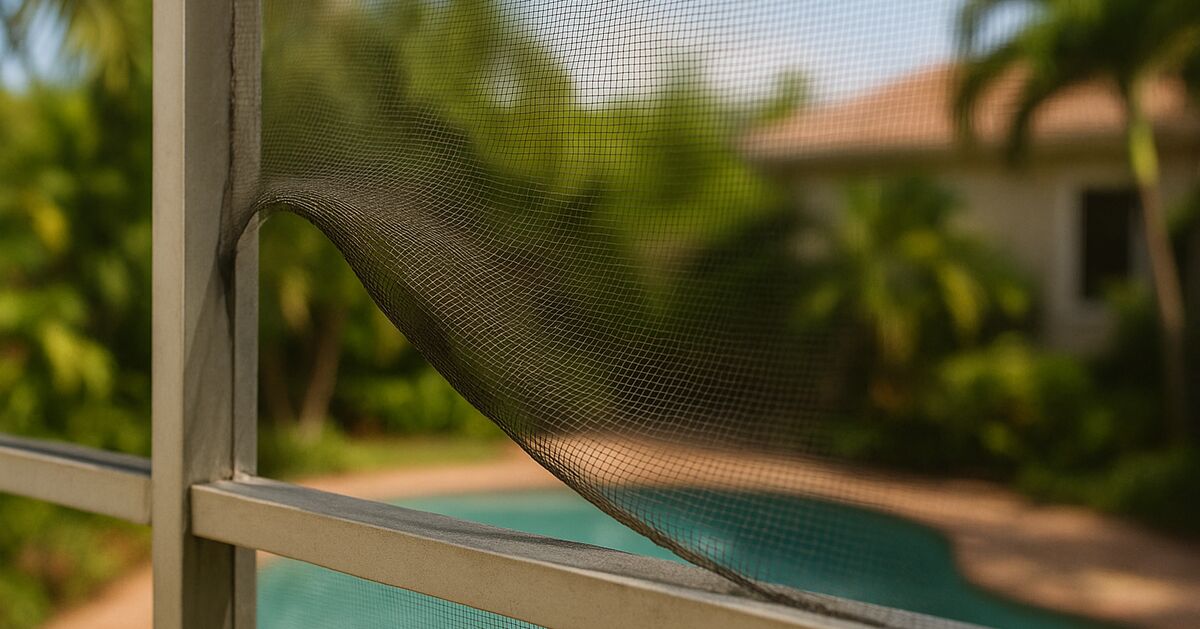
Your pool cage looked perfect the day it was installed. Then one afternoon you notice a bulging panel, or a mosquito lands on your arm while you are sitting on the lanai you specifically built to avoid mosquitoes. That small moment of annoyance is worth paying attention to. Screen enclosures are designed to last years, but they talk to you when something is wrong. The trick is knowing which signals you can safely monitor and which ones mean it is time to pick up the phone.
Below are five clear signs that a screen-repair professional needs to take a look, along with plain explanations of why each one matters more than it appears on the surface.
1. You are finding insects inside a closed enclosure
This is the most immediate, everyday indicator that your screen system has a breach. Florida's insect pressure is relentless. Manatee and Sarasota counties deal with everything from mosquitoes and no-see-ums to love bugs and stink bugs, and the entire point of a screen enclosure is to create a barrier between you and all of them.
When bugs are consistently getting in despite closed doors and no obvious gaping holes, the entry point is usually one of three things:
- A micro-tear or pinhole along a spline channel that is nearly invisible at eye level
- A lifted or shrunken spline that has left a gap between the screen and the frame
- A door sweep or corner gasket that has hardened, cracked, or pulled away from the frame
The mistake most homeowners make is walking the perimeter looking for a large tear. Tiny openings less than 2 millimeters wide are wide enough for no-see-ums, which measure roughly 1 to 3 millimeters in length. A professional runs a hand along every spline channel and door seal during an inspection, catching gaps that are genuinely invisible from standing height.
If bugs are getting in, something is open somewhere. A pro can find and close it in a single visit in the vast majority of cases. Our screen and pool-cage repair services cover full inspections as part of any repair call, so you are not paying separately just to have someone look.
2. One or more screen panels are visibly sagging, bulging, or pulling away from the frame
A flat, taut panel is a healthy panel. When you see a screen that bows inward, sags at the center, or has a visible bubble near one edge, the tension in that panel has been compromised. This happens for a few different reasons, and the cause matters because it determines the fix.
Spline failure is the most common culprit. The rubber or foam spline that locks the screen into the aluminum channel shrinks, hardens, and loses grip over time under Florida's UV exposure and heat. Once it lets go, even partially, the screen can migrate out of its seat and sag.
Frame damage is a less obvious cause. A bent or twisted aluminum rail changes the geometry of the opening, making a correctly tensioned screen appear slack. If the frame is the issue, re-screening without addressing the frame simply repeats the problem.
Improper initial installation also shows up this way. Screen that was not stretched correctly at the time of installation will relax over the first season and start to sag.
Why does a sagging panel deserve a pro rather than a watch-and-wait approach? Because a panel that has lost tension flexes in the wind. Every flex stresses the spline channel further and stresses the screen fibers at the edges. What starts as cosmetic sagging can become a blowout in the first strong afternoon thunderstorm. Anyone along the Gulf Coast from Parrish down through Sarasota and onto the barrier islands knows how fast summer storms arrive and how hard they can hit.
You can learn more about why tension is so critical in our post on why properly tensioned screen matters more than you think.
3. You see rust stains, white powder, or dark pitting on the aluminum frame
Aluminum does not rust the way steel does, but it absolutely corrodes. The white chalky powder you find on older pool-cage frames is aluminum oxide, a natural byproduct of the metal reacting with moisture and oxygen. The dark pitting underneath it is the surface of the aluminum being eaten away. Left alone, pitting can compromise the structural integrity of a rail or post over years.
Rust stains (the orange-brown streaks) usually mean steel hardware somewhere in the system is oxidizing. Screws, anchor bolts, hinges, and door closers are often made of steel even on otherwise aluminum structures, and in a coastal environment like Anna Maria Island, Longboat Key, or Lido Key, salt air accelerates that process dramatically.
Why call a pro at this stage rather than simply wiping the stain away?
Because corrosion is almost always deeper than what shows on the surface. A professional can probe the affected rail, test fastener integrity, and tell you whether you are looking at surface oxidation that just needs a clean and a coat of cage paint or whether a rail section has weakened to the point that it needs replacement before the next storm season. Catching a corroded post before a hurricane is an entirely different conversation from finding the damage after.
Our detailed post on rust on your pool cage: causes, cures, and prevention goes deep on this topic if you want the full picture before calling anyone.
4. Your screen door is sagging, sticking, binding, or not latching
A screen door that does not work properly is not just annoying. It is a security and pest-control failure. When a door sags, the bottom corner drags the ground or the frame and the latch no longer aligns with the strike plate. People start propping it open or forcing it shut, which bends the frame further and shortens the life of the door dramatically.
Door problems have a few common origins:
- Hinge fatigue or failure. Screen-door hinges are under more stress than they look, especially on heavier double doors. When a hinge pin wears or a hinge plate pulls away from the frame, the door drops and misaligns.
- Frame racking. If the surrounding pool-cage structure has shifted even slightly, the door opening becomes out of square. A door that fit perfectly in a square opening will stick, bind, and sag in a racked opening.
- Closer malfunction. Spring closers and hydraulic closers wear out. A closer that no longer pulls the door shut all the way leaves the enclosure open to every flying insect in the neighborhood.
- Spline failure on the door screen itself. The screen panel inside the door frame can sag and bunch against the bottom rail, creating drag.
The reason this earns a call to a professional rather than a DIY adjustment is that door problems are frequently symptoms of something else. A door that racks because the cage structure has shifted needs the structure addressed, not just the door rehung. A pro can tell the difference in about five minutes of looking at the hinges, the corners, and the door sweep. Our post on common screen-door hardware problems and how they get fixed walks through many of these in more detail.
Homeowners in Lakewood Ranch and Bradenton frequently ask us about doors that seemed fine and then suddenly started binding. Often it is the settling of a newer home's concrete pad in the first few years, which shifts the cage anchor points just enough to rack the door frame.
5. You spot a tear, hole, or pulled corner anywhere in the system
This one seems obvious, but many homeowners underestimate how quickly a small tear becomes a large one. Screen material, particularly standard 18x14 fiberglass mesh that has been in Florida sun for several years, becomes brittle. UV light degrades the plastic coating on every strand. A fiber that was once flexible enough to take a hit from a tennis ball without tearing becomes fragile enough to split from a branch tap or even a bird landing awkwardly.
A half-inch tear at the corner of a panel is not a half-inch problem. That corner is under tension in multiple directions simultaneously. The fibers around the tear are already stressed, which means the tear propagates. Add one windy afternoon and that half-inch opening can become a foot-long split by evening.
Tears at the corner of a panel, specifically where the spline channel meets a frame corner, carry additional meaning. Our post on what that tear in the corner of your cage really means explains why corner tears are often early warnings about spline failure across the whole panel rather than isolated damage.
A professional re-screens the damaged panel with properly tensioned new mesh, replaces the spline, and checks the adjacent panels for brittleness. That last step matters. If one panel has reached end-of-life UV degradation, the panels next to it are probably within a season or two of the same condition. A pro can tell you honestly whether you are better off replacing just the one damaged panel or doing the whole side of the enclosure while the crew is already set up and the costs of mobilization are already absorbed.
Why these five signs specifically warrant a professional
You might be thinking: I can patch a screen. And for a small pinhole in a relatively new screen on a healthy frame with a solid spline, a patch kit works fine as a temporary measure. But each of the five signs above points to something beyond the screen material itself. They each suggest a system issue: failing spline, corroded frame, structural shift, or advanced UV degradation. Addressing the symptom without the underlying cause is a repair that will not hold.
Professional screen technicians carry the right spline in the right diameter for your specific frame, the right screen mesh for your situation, and the tools to stretch it to consistent tension. They can also spot what is coming next, which is genuinely valuable information on the Gulf Coast where storm season runs six months of the year.
If you are unsure whether what you are seeing qualifies as a call-now issue or a watch-and-wait situation, our frequently asked questions page covers a lot of the common scenarios in plain language.
We serve homeowners across the Suncoast from Parrish and Palmetto in the north down through Ellenton, Bradenton, Lakewood Ranch, and the barrier islands including Anna Maria Island, Longboat Key, Lido Key, and Siesta Key, continuing south through Sarasota, Osprey, and Nokomis. You can see the full service area on our locations page.
If you are seeing any of the five signs above, the most useful next step is a professional set of eyes on the enclosure. Get in touch with us and we can typically schedule an assessment quickly, especially outside of peak storm-season rush periods.
A screen enclosure is a significant investment in your home's comfort and value. The signs it sends you are worth listening to sooner rather than later.