Why Your Screen Panels Keep Popping Out: Spline 101
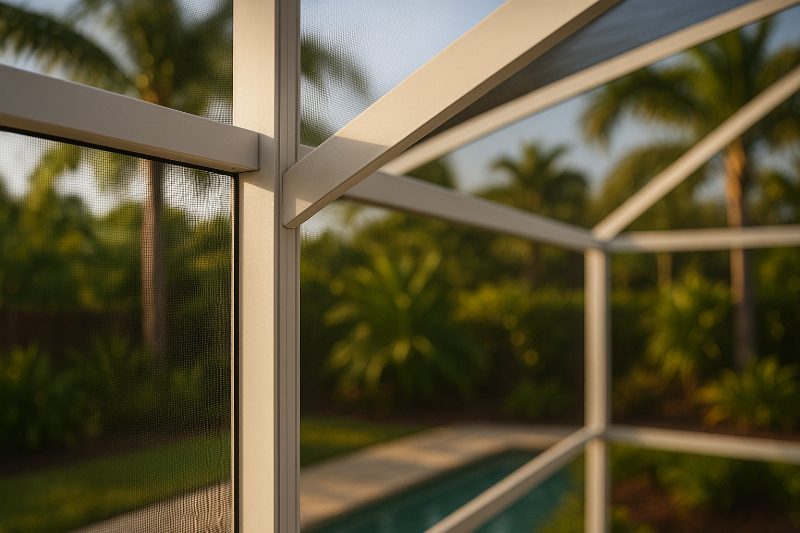
Your screen panel pops out for the third time this month, and you push it back in, tell yourself you'll deal with it later, and walk inside. A week goes by. Then a storm rolls through, the panel blows out completely, and now you've got mosquitoes in the lanai and a mangled piece of fiberglass screen sitting in the flower bed. Sound familiar? The root cause is almost never the screen itself. It's the spline, and once you understand how spline works, the whole problem makes a lot more sense.
What Spline Actually Is (and Why It Matters So Much)
Spline is a flexible cord, usually made from vinyl, that gets pressed into a channel running around the perimeter of each screen frame. When the screen is installed, the mesh is laid over the opening, and then the spline is rolled on top of it into that channel. The spline wedges the screen tight against the walls of the groove, holding the whole panel in place with friction alone. There are no staples, no glue, no screws holding your screen to the frame. Just that little rope of vinyl.
That's an elegant system when it works, but it also means the entire integrity of every panel in your enclosure depends on a piece of soft material that lives outdoors in the Florida sun, rain, and heat 365 days a year. When the spline fails, the screen fails with it. Full stop.
If you want a deeper look at how spline fits into the bigger picture of your enclosure's structure, our post on the anatomy of a pool cage: frame, screen, spline, and hardware walks through every component in plain language.
The Main Reasons Spline Fails in Florida
Florida's climate is genuinely brutal on spline. Here are the specific forces working against it.
UV degradation
Vinyl absorbs ultraviolet radiation over time. As it does, it loses the plasticizers that keep it flexible and grippy. Old spline becomes stiff, brittle, and slightly smaller in diameter as it shrinks. Once it shrinks, it no longer fills the channel snugly, and the screen can pull free with very little force. This is especially pronounced on west- and south-facing panels that get direct afternoon sun. If your screen looks grey and faded, the spline is probably in equally bad shape. Our post on why your screen looks grey and brittle: UV damage explained covers this degradation process in detail.
Heat cycles
Temperatures on a screened lanai or pool cage in Bradenton or Sarasota can swing dramatically between a cool winter morning and a blazing summer afternoon. Vinyl expands in the heat and contracts when it cools. After hundreds of these cycles, the spline loses its original shape and tension. It stops sitting perfectly in the channel and starts backing out at the corners, which is the first place panels usually pop loose.
The wrong diameter was used
This is a very common installer mistake, especially with DIY repairs. Spline comes in several diameters, typically ranging from about 0.140 inches up to 0.210 inches or larger. The correct size depends on the depth of the channel in your specific frame. Use a spline that's too thin and it will never hold properly. Use one that's too thick and you won't get it fully seated, which creates pressure points that eventually push the screen back out. Getting the diameter right is not guesswork; you match it to the frame or you measure the old spline.
Poor initial installation
If the spline was not pressed all the way into the channel during the original install, it was only a matter of time before it worked loose. Corners are the hardest part to seat properly, and a lot of amateur installations leave the spline slightly proud of the channel at the corners. Wind pressure and screen tension do the rest over time.
Storm and wind stress
A strong storm doesn't have to tear your screen to loosen the spline. Wind pressure pushing against a large panel creates significant outward force all along the frame perimeter. If the spline is already aged or marginally sized, one good storm is all it takes to pop a panel. Homeowners in Parrish, Palmetto, and Ellenton know firsthand how gusty afternoons can get, and coastal areas like Anna Maria Island, Siesta Key, and Longboat Key deal with sustained salt air that accelerates vinyl degradation even further.
How to Tell If the Spline Is Your Problem
Pull out a panel that has popped loose and look at the groove around the frame. If the spline is still in the channel, press on it with your fingernail. Fresh, healthy spline is somewhat squishy and resilient. Old spline feels rock-hard, and if you look closely you may see small cracks along the surface. Pull a short section out and bend it. If it cracks or snaps rather than bending smoothly, it's done.
Also look at the diameter. Does the spline look like it barely fills the channel, leaving visible gaps along the walls? That's undersized spline. Does the screen material look like it was never really tucked in properly at the corners, with little folds or bunching? That's a sign the installer had trouble seating an oversized spline, or just didn't take the time to do it right.
Another clue: if panels are popping out at the corners specifically rather than along the flat sides, the spline was almost certainly not seated correctly at the corners during installation.
The Correct Way to Re-Spline a Panel
Doing this right is straightforward, but it requires patience and the right tools.
- Remove the old spline completely. Don't try to re-use it. Pull it all the way out of the channel all the way around the frame, and pull the old screen mesh with it.
- Clean the channel. A stiff brush or a rag removes grit, old vinyl residue, and anything else that would prevent the new spline from seating flush.
- Cut new screen to size. Leave two to three inches of overhang on all sides. You'll trim the excess after the spline is seated.
- Lay the screen flat over the frame. Keep tension even so the mesh doesn't run at an angle.
- Use a spline roller to press the spline in. Start at a corner and work your way along one side before doing the adjacent side. Do not pull the screen tight by hand and try to force the spline in; let the roller do the work. Pulling too hard distorts the weave.
- Work the corners carefully. This is where most problems originate. Press the spline fully into the corner of the channel. A small flathead screwdriver can help seat it without cutting through the spline.
- Trim the excess screen. Run a utility knife along the outside edge of the spline groove to cut away the overhang cleanly. Hold the blade at a slight angle toward the spline so you don't accidentally cut the screen on the inside of the channel.
It sounds simple, and for an experienced installer it is. For a homeowner doing it the first time on a 4-foot-by-8-foot panel in July heat, with a roller that keeps slipping and screen that won't stay flat, it gets frustrating fast. There's no shame in calling a professional for this, especially if you have more than a panel or two to do. You can review what's included in a professional re-screening job on our services page.
Choosing the Right Spline for Your Enclosure
Not all spline is the same. Beyond diameter, you have material choices.
Standard vinyl spline works well in most residential applications and is the most common option. It's affordable, widely available, and easy to work with.
Foam-core spline has a vinyl shell around a foam interior. It compresses slightly when seated, which gives it a tighter fit in channels that are worn or slightly larger than standard. Some installers prefer it for older frames where the channel has widened over years of use.
Solar screen spline is a slightly different formulation used specifically with heavier solar screen mesh, which is thicker than standard fiberglass and needs a correspondingly thicker spline to fill the channel correctly.
For most pool cages and lanai enclosures in the Sarasota and Manatee County area, standard vinyl spline in the correct diameter is the right answer. If you're not sure what you have, bring a short piece of the old spline to a screen supply store, or just let a professional measure it during a service visit.
When Replacing Spline Is Not Enough
Sometimes the problem is not just the spline. If your frame channel is cracked, corroded, or bent, new spline will not hold any better than the old spline did. Aluminum pool cage frames in coastal environments, particularly on Anna Maria Island, Lido Key, and Nokomis, can suffer oxidation and pitting that widens the channel and weakens the groove walls. In those cases, the frame section may need to be replaced before re-screening makes sense.
Similarly, if the mesh itself is damaged, stretched out of shape, or clogged with debris to the point that it's holding water weight, no amount of fresh spline will save it. The screen and spline should generally be replaced together when the mesh shows significant wear. Our frequently asked questions page covers how to tell when it's time for a full re-screen versus a spot repair.
Also worth noting: if your panels are popping out repeatedly after storms, it may be worth considering whether your screen type is right for your exposure level. There are options with better wind resistance than standard fiberglass. Our post comparing Florida glass vs. privacy screen for your lanai looks at some of the alternatives in detail.
What a Professional Inspection Covers
A good screen enclosure technician will do more than just re-spline the loose panels. They'll check every panel for proper spline seating, look for signs of UV degradation across the whole enclosure, inspect the frame for corrosion or bent sections, and note whether your current screen type is appropriate for your location and sun exposure.
Homeowners in Lakewood Ranch tend to see mainly UV and heat-cycle failures, since they're further from the salt air. Homeowners right on the coast in Siesta Key or Longboat Key deal with accelerated corrosion on top of UV wear, so their enclosures often need more frequent attention. Knowing what's specific to your situation is part of what you get from a professional set of eyes. You can learn more about how we approach enclosures across the region on our locations page.
The Bottom Line
A screen panel that keeps popping out is telling you something specific: the spline holding it in place has stopped doing its job. The fix is not to push the panel back in and hope for the best. The fix is to pull the spline, assess the frame channel, choose the correct replacement spline, and re-install the screen properly from scratch. Do it right once and that panel will stay put for years.
If you're dealing with multiple panels, a full cage that needs re-screening, or you're just not sure what's going on, we're happy to take a look. Reach out through our contact page and we'll schedule a time to come assess your enclosure, no pressure, just a straight answer about what it needs.