Pet-Resistant Screen: Is It Worth It for Cats & Dogs?
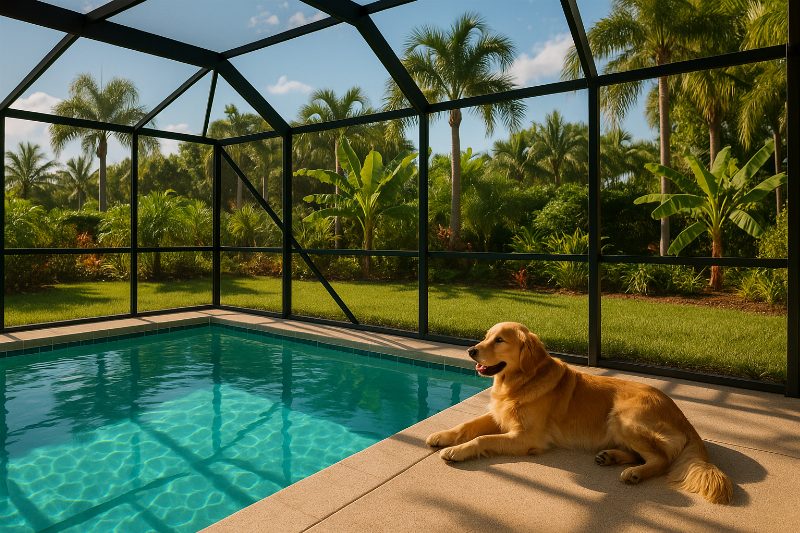
Your dog spots a squirrel through the lanai screen and that's it - he's through before you can say "sit." Your cat, meanwhile, has been slowly unraveling the bottom corner of the pool cage for three months. If either of those scenes sounds familiar, you already know why pet-resistant screen exists. The real question is whether it's worth paying more for it, or whether a few repairs and some training will do the job just as well.
Here is an honest, practical answer.
What "Pet-Resistant" Actually Means
Pet-resistant screen is not pet-proof. No woven mesh short of welded steel wire is truly impervious to a determined 80-pound Labrador. What pet-resistant screen does is resist the specific kinds of damage that dogs and cats cause most often: claw punctures, pawing pressure, and the slow abrasion of rubbing and scratching.
The most common product you will see is a vinyl-coated polyester mesh (sometimes called "Super Screen" or a similar trade name) that is noticeably heavier and stiffer than standard fiberglass screen. Standard fiberglass screen is usually 18x14 mesh woven from very fine strands and weighs roughly 2.8 ounces per square yard. Pet-resistant mesh is typically woven from thicker strands and can weigh three to four times as much. That extra mass and stiffness means a paw swipe that would punch right through standard screen may simply bounce off the pet screen, leaving it intact.
The tradeoff is visibility and airflow. Heavier mesh blocks slightly more light and can reduce air circulation compared to a fine-gauge fiberglass screen. In practical terms most homeowners in Bradenton or Sarasota report barely noticing the difference, but if your lanai gets limited natural light it is worth thinking about.
How Cats and Dogs Damage Screens Differently
Understanding the damage pattern helps you choose the right fix.
Dogs tend to cause sudden, blunt-force damage. A dog that charges a squirrel or another dog through a screen is going to create a large tear or blow out an entire panel. Dogs also paw at screens when they want to come inside, wearing away the bottom 12 to 18 inches of a panel over time. Large breeds can lean their full weight against a screen in a lower panel frame, popping the spline out of the channel even before the mesh itself tears.
Cats are slower and more methodical. They scratch, which gradually frays the weave. They also like to climb mesh that has any give at all, using it as a vertical highway to get to a sunny perch. A cat that climbs a standard fiberglass screen panel will eventually separate the mesh from the spline at the top or bottom, leaving a sagging, bubbled-out section.
Knowing which pattern applies to your pets tells you how much reinforcement you actually need. A cat that only lightly scratches the bottom of one panel is a much smaller problem than a 70-pound Weimaraner who charges the screen every time a bike goes past.
The Mesh Options You Will Actually Encounter
When you talk to a screen contractor, you will hear a few different terms. Here is a plain-language breakdown:
- Standard fiberglass screen (18x14, .013") - The default. Affordable, good airflow, low visibility. Fine for homes without pets or with very small, calm animals.
- Heavy-duty fiberglass (17x14, .020" or similar) - Slightly thicker strands. Marginally more durable. Not a meaningful upgrade for households with active dogs or cats.
- Vinyl-coated polyester / pet screen (typically 20x20 count) - This is the real pet-resistant product. Much heavier, noticeably stiffer, holds up well to clawing and pawing. This is what most contractors recommend when pets are the primary concern.
- Phifer PetScreen - One of the most recognized brand names in this category. It is marketed specifically for pet resistance and is widely available in charcoal and black.
- BetterVue or UltraVue - These are high-visibility, very fine mesh screens optimized for a clear view and good airflow. They are actually more delicate than standard screen and are the worst possible choice for a pet household.
For an in-depth look at how mesh fits into the broader anatomy of your enclosure, including frame profiles, spline sizes, and hardware, read our post on the anatomy of a pool cage: frame, screen, spline and hardware. It will help you understand exactly what a contractor is talking about when they walk through the job with you.
Where Pet-Resistant Screen Makes the Most Sense
You do not have to re-screen every panel in your enclosure with pet-resistant mesh. In fact, most experienced contractors in the area advise a targeted approach.
Re-screen only the vulnerable panels. Pet damage almost always happens in a predictable zone: the lower two or three feet of panels at ground level, and any panel that is directly adjacent to a door or gate. Those are the spots where dogs charge and cats scratch. Re-screening those specific panels with pet mesh while leaving upper panels and roof sections in standard or solar mesh keeps costs down and gives you the most protection where you actually need it.
Pair it with a bottom rail or pet guard. Some homeowners in Lakewood Ranch and Parrish who have large dogs add a horizontal aluminum rail at about 18 to 24 inches off the ground across the lower panels. This physical barrier takes the brunt of impact before it ever reaches the screen. Combined with pet mesh, it is about as close to foolproof as you will get in a residential setting.
Consider it during a full re-screen. If you are already replacing all the mesh on a pool cage after years of UV degradation (a very common situation in this part of Florida, where the sun is relentless), it costs relatively little extra to upgrade the lower panels to pet screen at the same time. You are already paying for the labor; the material upgrade is a fraction of the total job.
When Regular Screen Repair Is the Better Call
Pet-resistant mesh is not automatically the right answer. Here are situations where standard screen repair makes more sense:
- Your pet is older or less active. A seven-year-old rescue beagle who mostly naps on the lanai is not the same risk as a two-year-old border collie. Standard fiberglass is fine.
- The damage is in a panel your pet cannot reach. Roof sections, high side panels, and upper horizontal panels are rarely touched by pets. Standard mesh or solar screen there is the right call.
- The damage was a one-time event. A dog that charges through a screen once because a thunderstorm panicked it is a different situation than one that regularly paws at the same spot. A simple repair plus some management (keeping the dog indoors during storms) may be all you need.
- You are renting or preparing to sell. If you are getting the enclosure presentable for a sale, standard screen at a lower cost often makes more financial sense than a premium upgrade.
Our frequently asked questions page covers many of the common "repair vs. replace" dilemmas homeowners run into, and it is a good starting point if you are on the fence.
The UV Factor: Why Florida Makes Everything Harder
Here in southwest Florida, any screen mesh degrades faster than it would in a northern climate. UV radiation from the intense sun breaks down fiberglass binders over time, causing the mesh to become brittle and grey. A screen that might last 10 years in Ohio may start showing UV fatigue in five to seven years here, especially on south-facing and west-facing panels that get the most direct afternoon sun.
Pet-resistant vinyl-coated polyester mesh generally holds up better to UV than standard fiberglass, because the vinyl coating acts as a partial UV barrier for the underlying polyester strands. It is not immune, but it does tend to last longer. If you want a deep dive into what UV damage looks like and why it happens, our post on why your screen looks grey and brittle explains the chemistry in plain language.
This is worth keeping in mind when you are weighing the cost of pet screen against standard fiberglass. If pet screen lasts two or three years longer in the Florida sun, that changes the long-term math on which option is actually cheaper.
Keeping No-See-Ums Out Too
One thing that sometimes gets overlooked when people switch to pet-resistant mesh: mesh count matters for pest control. Standard 18x14 mesh keeps most mosquitoes out, but the tiny biting midges that Floridians call no-see-ums can squeeze through it. Some pet-resistant mesh products use a tighter 20x20 weave, which actually helps block no-see-ums better than standard screen.
If you have ever sat on your lanai at dusk and found yourself getting bitten by something you could barely see, you know exactly how miserable these insects are. Our post on keeping no-see-ums out of your screened lanai goes into detail on which mesh counts actually work and what other steps help. It is worth reading alongside this one if no-see-ums are a concern in your neighborhood.
What to Expect From a Pet-Screen Installation
The installation process for pet-resistant mesh is essentially the same as any screen replacement. A technician removes the old spline (the rubber cord that holds the mesh in the frame channel), pulls out the old mesh, cuts new mesh to size, lays it over the frame, and presses new spline into the channel to lock it in place. Pet mesh is stiffer and requires more force to seat the spline properly, which is why it helps to have an experienced installer rather than attempting a DIY job on a large panel.
Because the mesh is heavier, it also needs to be pulled tighter to avoid sagging. A panel of pet screen that is not tensioned correctly will sag toward the middle within a few months, especially in Florida's heat. Sagging mesh looks bad, reduces structural resistance to impact, and can actually make it easier for a dog to push through. A properly installed panel should be taut with no visible waviness.
Turnaround for most jobs in the Sarasota and Bradenton area is quick. Single-panel repairs can often be done the same day. A full lower-panel re-screen on a standard pool cage typically takes a few hours.
Practical Tips Before You Call a Contractor
A few things worth doing before you get a quote:
- Walk your enclosure and photograph every damaged panel. This lets a contractor give you an accurate estimate without having to schedule a preliminary visit.
- Note which panels are at ground level versus elevated. A contractor can tell you right away which panels are candidates for pet mesh and which are not.
- Think about your pets' specific behavior. Mention to the contractor whether you have a dog that charges, a cat that climbs, or both. The recommendation may differ.
- Ask about spline replacement. If your spline is more than five or six years old, it may be brittle and worth replacing at the same time even if it looks okay.
- Ask about frame condition. Sometimes repeated pet impact dents or bends the aluminum frame members, and no amount of good mesh will hold up well in a damaged frame channel.
Our team serves homeowners across the region, from Anna Maria Island and Siesta Key to Ellenton and Palmetto. If you are not sure whether pet-resistant mesh is the right call for your specific enclosure, the easiest thing to do is reach out and describe what you are dealing with. A quick conversation saves a lot of second-guessing.
The Bottom Line
Pet-resistant screen is genuinely worth it if you have an active dog that pushes or charges screens, or a cat that claws and climbs mesh regularly. It is not magic, but it handles the most common kinds of pet damage much better than standard fiberglass, and it tends to last longer in Florida's UV environment.
The smart move for most households is a targeted upgrade: pet mesh on the lower ground-level panels where damage actually happens, standard or solar mesh everywhere else. That approach gives you meaningful protection without replacing every square foot of screen on the enclosure.
If the damage is already done, start with a repair and talk to your contractor about whether pet mesh makes sense for the repaired panels going forward. A good contractor will give you an honest read on whether the upgrade pencils out for your specific situation rather than just upselling you on the most expensive product available.
Your lanai should be somewhere you and your pets can both enjoy. The right mesh makes that possible without constant repairs.